2026 Best Carton Box Packaging Trends for Sustainable Solutions?
As the world shifts towards sustainability, carton box packaging takes center stage. Businesses recognize its potential to reduce environmental impact. This shift is not just necessary; it reflects consumer demand for eco-friendly solutions.
In 2026, we see exciting trends reshape carton box packaging. Innovations emerge, focusing on biodegradable materials and minimalist designs. Companies explore ways to enhance recyclability. However, not all trends are perfect. Some designs may lack durability, raising concerns for shipping.
Packaging should balance sustainability and functionality. The challenge lies in creating designs that appeal to consumers while reducing waste. These conflicting goals require careful consideration. As we navigate this landscape, it’s clear that carton box packaging holds significant promise for a greener future.
Innovative Materials in Carton Box Packaging for Sustainability
Innovative materials are shaping the future of carton box packaging. Sustainability is at the forefront of this evolution. Biodegradable options are an exciting development. These materials decompose naturally, reducing landfill waste. For example, cornstarch-based polymers can replace traditional plastics. They are lightweight but strong, ensuring product safety during transport.
Another trend includes recycled paper and cardboard. Using post-consumer waste reduces the need for new raw materials. This practice not only conserves resources but also enhances circularity. However, not all recycled materials are created equal. Some may compromise quality and durability. Companies must find a balance to maintain product integrity.
Lastly, the rise of plant-based inks is worth mentioning. These inks are derived from renewable resources and lessen environmental impact. However, they can sometimes be less vibrant than synthetic counterparts. Brands need to prioritize environmental concerns over aesthetics. Overall, the journey towards fully sustainable carton packaging is ongoing, with much to learn and improve upon.
Biodegradable and Compostable Options for Eco-Friendly Packaging
The shift towards biodegradable and compostable packaging is accelerating. Recent studies indicate that 74% of consumers prefer eco-friendly options. This trend echoes growing awareness about environmental impact. Packaging waste contributes significantly to landfills, where it takes decades to decompose. Biodegradable materials break down naturally, reducing landfill impact and pollution.
Compostable packaging goes a step further. It can turn into nutrient-rich compost in the right conditions. In fact, research suggests that composting can reduce greenhouse gas emissions by up to 70%. However, there's a catch. Not all biodegradable products are compostable. Some may claim to be biodegradable but require specific conditions to break down. Consumers can easily be misled by misleading labels.
Companies face added pressure to switch to sustainable solutions. Yet, many struggle with sourcing materials that are both functional and eco-friendly. There's a fine balance between cost, performance, and sustainability. While advancements are being made, not all products meet the stringent standards needed for true eco-friendliness. It’s a complex issue that demands ongoing attention and reflection.
Design Trends Emphasizing Minimalism in Carton Box Solutions
The design landscape for carton box packaging is evolving rapidly. In 2026, minimalism takes center stage. This trend focuses on simplicity and functionality. Many brands are opting for clean lines and less clutter. According to industry reports, 75% of consumers prefer packaging that is straightforward and easy to understand.
Minimalist designs often use a reduced color palette. They rely on one or two colors for effective branding. This strategy not only saves on printing costs but also aligns with sustainability goals. By using fewer resources, companies reduce waste. Studies show that minimalist packaging can lower production costs by up to 30%.
Tips: Choose eco-friendly materials. Explore recycled cardboard options. Experiment with different textures to enhance tactile appeal. Structural integrity is key. Ensure that the minimalism doesn’t compromise protection. Many consumers appreciate innovative designs, but they also demand reliability. Minimalism challenges brands to refine their messaging while maintaining essential features.
2026 Best Carton Box Packaging Trends for Sustainable Solutions
This bar chart illustrates the top trends in carton box packaging for 2026, highlighting a shift towards sustainable solutions and minimalistic designs. The data shows the percentage adoption of each trend among surveyed packaging professionals.
Technological Advancements Enhancing Recycling Processes
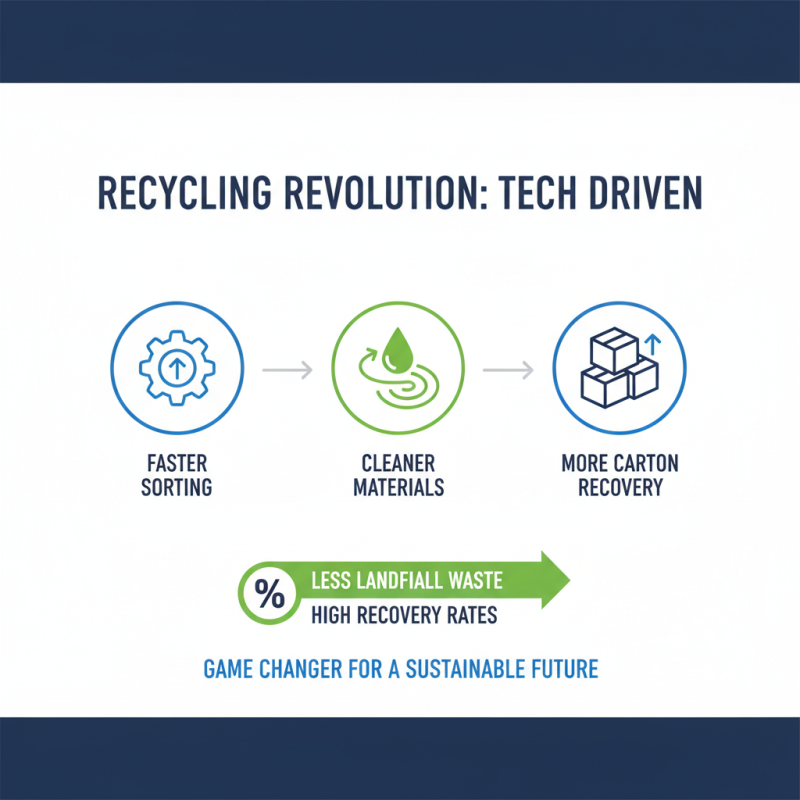
Technological advancements are reshaping the recycling landscape. Innovations in machinery enable faster sorting of materials. New processes can separate contaminants with greater efficiency. This is a game changer for carton box recycling. The goal is to increase recovery rates. A higher recovery means less waste in landfills.
Smart recycling technologies, like AI and machine learning, are in the spotlight. They analyze the composition of materials instantly. With precision, they optimize the sorting process. Yet, challenges remain. Not all facilities adopt these technologies. Budget constraints can hinder the shift.
Consumer awareness is another important factor. Education on proper disposal can drive better recycling practices. However, misconceptions persist among the public. Many still struggle with understanding what can be recycled. This gap highlights the need for improved outreach. It is essential to bridge this knowledge divide for a sustainable future.
Consumer Preferences Driving Sustainable Packaging Choices
Consumer preferences are shaping the future of packaging significantly. A recent report from McKinsey reveals that over 70% of consumers prefer sustainable packaging options. This shift is largely driven by growing environmental awareness. Shoppers want packaging that aligns with their values. They are seeking materials that reduce waste and carbon footprint.
Surveys indicate that 65% of customers are willing to pay more for eco-friendly packaging. Decision-making is influenced by the desire for recyclable or compostable materials. Brands need to adapt to this trend. However, the challenge lies in balancing cost with sustainability. Some companies struggle to find affordable alternatives. The packaging industry must innovate to meet these rising expectations.
Importantly, not all consumers trust sustainability claims. Research indicates that 30% of shoppers are skeptical of green packaging. Transparency is crucial for companies aiming to build trust. Clear communication about sourcing and manufacturing is necessary. This ongoing evolution demands reflection on current practices. Businesses must reevaluate their processes to genuinely embrace sustainability.
2026 Best Carton Box Packaging Trends for Sustainable Solutions
| Trend |
Description |
Consumer Preference (%) |
Market Impact ($ Billion) |
| Biodegradable Materials |
Use of materials that decompose naturally, reducing landfill impact. |
75% |
3.5 |
| Recyclable Packaging |
Packaging that can be processed and used again to make new products. |
80% |
4.2 |
| Minimalist Design |
Simple and functional packaging designs that reduce excess material. |
65% |
2.9 |
| Plant-Based Inks |
Inks derived from plants that are less harmful to the environment. |
70% |
1.8 |
| Smart Packaging |
Packaging that incorporates technology for tracking and monitoring. |
55% |
3.1 |