2026 Top Thermal Print Paper Types for Global Buyers
Thermal Print Paper has become a strategic material for receipts, shipping labels, tickets, medical records, and retail shelf tags. Global buyers now face more than a simple price decision. They must compare image durability, coating sensitivity, roll dimensions, printer compatibility, and regulatory documentation. A receipt that fades inside a hot delivery van is not a minor inconvenience. It can become a service failure.
Industry forecasts show continued demand, although the numbers vary. Smithers’ The Future of Thermal Printing to 2029 links growth with logistics, retail automation, healthcare identification, and mobile point-of-sale systems. Grand View Research also identifies e-commerce shipments and direct thermal labels as important market drivers. Their estimates differ because analysts define the market differently. That disagreement deserves attention. Forecasts are useful, but they are not guarantees.
Mike Fairley, a long-standing label-industry specialist, has stated, “Thermal printing is about matching the material to the application, not simply choosing the lowest price.” This principle guides the 2026 comparison. Direct thermal, thermal transfer, top-coated, linerless, BPA-free, and phenol-free papers each solve different operational problems. Some perform well under refrigeration. Others resist abrasion, moisture, or sunlight more effectively. No single grade fits every supply chain.
This guide examines the leading Thermal Print Paper types for global buyers. It considers performance, sustainability claims, storage conditions, and total operating cost. Product certifications still require verification. Supplier promises should not replace testing. That is where buyers often underestimate risk.
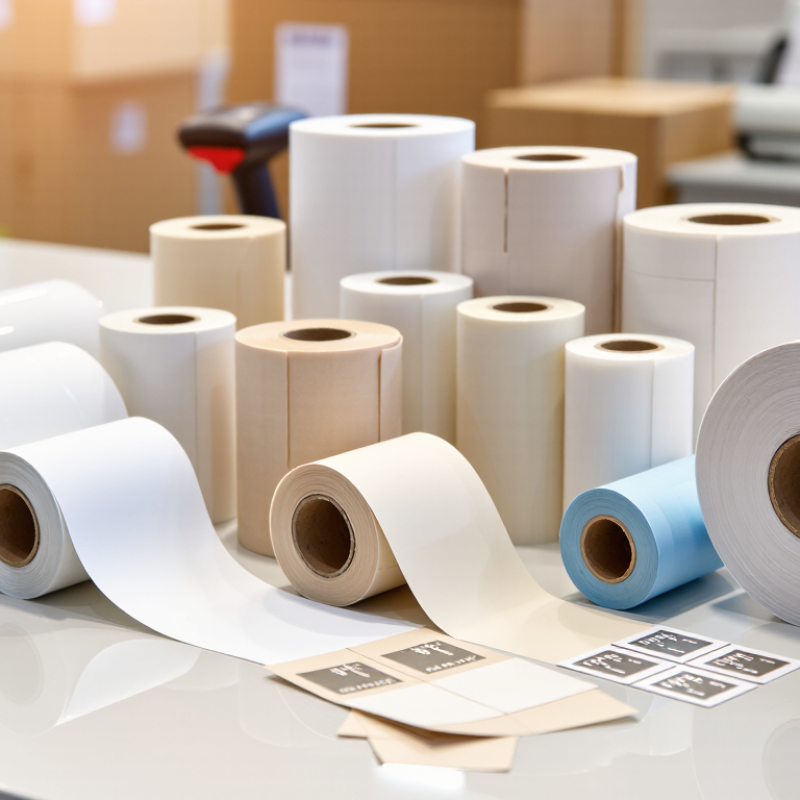
Thermal Print Paper: Definition, Structure, and Core Printing Methods
Thermal print paper is a heat-sensitive material used for receipts, labels, tickets, and shipping records. It creates images without liquid ink. A heated printhead activates selected areas on the paper surface. The result is fast, quiet, and usually easy to scan.
Its structure has several layers. The base paper provides strength and controls feeding through the printer. A thermal coating contains a color former, developer, and sensitizer. Heat triggers a chemical reaction within this coating. Some grades include a protective topcoat against moisture, oil, friction, or sunlight. Synthetic thermal media can resist water better, but it may cost more and feel less natural. The back coating also matters. It can reduce curl and protect printer rollers.
Direct thermal printing uses heat-sensitive paper directly. It suits short-life receipts, queue tickets, and temporary labels. Thermal transfer printing uses a heated ribbon to move ink onto the label surface. This method usually offers stronger resistance to abrasion, chemicals, and changing temperatures. Buyers should match the method with storage time and handling conditions. A frozen-food label needs different protection from a café receipt.
In practical checks, test roll width, core size, smooth feeding, image darkness, and barcode readability. Storage is easy to overlook. Heat, humidity, and sunlight can darken unused paper. That assumption can fail. I would also question exaggerated durability claims and request application-based testing before large purchases.
2026 Top Thermal Print Paper Types for Global Buyers
Thermal print paper is a heat-sensitive substrate used to create images without liquid ink. Its structure typically includes a base paper or synthetic film, a thermal coating, and optional protective layers. The chart compares representative caliper values commonly used in global purchasing specifications.
How to read the chart: Standard receipt stock is usually thinner for efficient roll usage, while label, tag, and synthetic thermal materials are generally thicker to improve durability, stiffness, or moisture resistance. Actual specifications vary by application, coating, and supplier.
Main Thermal Paper Types and Their Distinctive Features
Thermal paper is not one material. It is a performance choice. Direct thermal paper develops images through a heat-sensitive coating. It needs no ribbon, making it efficient for receipts, tickets, and short-life labels. However, sunlight, heat, and plasticizers can fade printed marks. Thermal transfer paper uses a ribbon to create a more durable image. It suits warehouse labels, asset tags, and outdoor identification. The ribbon adds cost and process steps.
Top-coated direct thermal grades improve resistance to moisture, abrasion, and oils. Synthetic thermal stocks offer stronger tear and water resistance than ordinary paper. Linerless thermal labels reduce release-liner waste, but applicator settings must be precise. Poor alignment creates curling and jams. Grand View Research estimated the global thermal paper market at approximately USD 4.5 billion in 2023. Its forecast indicates continued growth through 2030, supported by retail, transport, and logistics demand. Smithers’ 2024 thermal-printing analysis also identifies durability and supply consistency as key purchasing concerns.
In practice, buyers should test the actual printer, platen pressure, storage temperature, and scan performance. A sample roll can reveal more than a polished specification sheet. I have seen “water-resistant” paper fail after condensation. That claim needs questioning. Ask for basis weight, coating performance, image density, and aging data. Verify chemical compliance for the destination market. The cheapest grade may cost more when unreadable barcodes trigger reprints, returns, or manual entry.
How to Compare Thermal Paper Quality, Performance, and Applications
Global buyers should compare thermal paper by measurable performance, not appearance alone. Start with basis weight, thickness, smoothness, and coating uniformity. A clean surface supports sharper text and fewer printer jams. Ask for sample rolls before placing a large order.
Test the paper in the actual printer and at normal operating speed. Check image darkness, edge definition, heat sensitivity, and print persistence after handling. Test the roll first. Rub printed areas, expose samples to light, and store others in warm, humid conditions. Good paper should print clearly without excessive heat. Excessive heat can shorten printhead life and create blurred details.
Application determines the right specification. Retail receipts need reliable contrast and smooth feeding during high-volume printing. Logistics labels require strong adhesion, readable barcodes, and resistance to friction. Medical or laboratory records may need longer image stability and controlled chemical compliance. Verify core size, roll length, winding direction, and packaging protection before shipment. Small defects matter. A slightly uneven coating may pass a visual inspection but fail during barcode scanning. I have seen procurement teams focus on price, then pay more for reprints and rejected deliveries. That approach needs reconsideration. Supplier documents should include test results, storage guidance, and material declarations. Independent verification is useful when performance affects traceability or customer records.
Global Buyer Guide to Sizes, Coatings, Compliance, and Packaging
Choosing thermal paper globally starts with the application, not the lowest quoted price. Direct thermal paper suits receipts, labels, and short-term tickets. Thermal transfer paper needs a ribbon and usually offers stronger image durability. Measure roll width, core diameter, outer diameter, and winding direction before ordering. A two-millimeter error can stop a printer line. Common widths include 57, 80, and 110 millimeters, but equipment manuals remain decisive. Test the actual printer, especially when margins are tight.
Coatings control image clarity, friction, moisture resistance, and storage life. A smooth topcoat can protect small barcodes during handling. A backcoat may reduce dust and prevent sticking inside high-speed equipment. For refrigerated logistics, ordinary receipt stock may fail quickly. Ask for basis weight, caliper, sensitivity, and image stability data. Do not trust “premium” alone. It says little without test conditions. Samples matter. Request samples from each production lot, because coating consistency can change.
Compliance documentation should match the destination and end use. Request declarations for chemical restrictions, heavy metals, and restricted developers such as BPA or BPS. Food-contact applications require separate evaluation; general thermal paper is not automatically suitable. Requirements can differ by country and may change. Verify documents against current local rules, not an old supplier file. Packaging also affects quality. Use moisture-resistant cartons, edge protection, batch labels, and clear pallet marks. Keep rolls away from heat, sunlight, solvents, and pressure. Desiccant can help on humid routes, but it cannot replace sealed wrapping.
2026 Trends Shaping Thermal Print Paper Selection Worldwide
2026 Trends Shaping Thermal Print Paper Selection Worldwide
Thermal paper selection is becoming more technical in 2026. Buyers now compare print quality, chemical safety, recyclability, and storage performance together. Cost still matters, but it no longer decides every purchase.
Sustainability is influencing direct thermal and thermal transfer paper choices. Many procurement teams request phenol-free coatings and clear compliance documents. They also ask whether paper fibers fit local recycling systems. This detail matters. A recyclable label can still create waste if its adhesive or coating is unsuitable. Regional regulations are becoming stricter, so suppliers should provide current test reports and material declarations.
Climate performance is another major trend. Paper used in humid warehouses needs stable coating and strong image retention. Transport labels may face heat, sunlight, abrasion, and condensation. Laboratory testing helps, but field trials reveal unexpected problems. Small samples often behave differently on fast printers. Buyers should test rolls with their actual machines, print speeds, and storage conditions.
Digital logistics is increasing demand for compact labels, variable data, and dependable scanning. Retail, healthcare, and manufacturing users need sharp barcodes with fewer reprints. Thermal transfer remains valuable where long-term durability is essential. Direct thermal paper can reduce ribbon use, yet it may fade under heat or light. No type wins everywhere. Experienced buyers should review the full application, not just the lowest roll price.