
A Child Proof Metal Box is judged by more than its steel gauge or clean finish. Buyers need reliable closure performance, consistent dimensions, and clear quality records. These details matter when comparing China-based manufacturers and suppliers. A neat sample is useful, but it cannot prove every production batch will perform the same way.
The American Association of Poison Control Centers’ 2023 National Poison Data System Annual Report recorded more than 2.4 million human exposure cases. The figure covers many substances and age groups; it is not a measure of metal-box demand. Still, it shows why practical access prevention deserves careful attention. Pediatric toxicologist Dr. Michael Shannon’s safety message is often summarized as: “Child-resistant is not childproof.” Small details matter.
For purchasers, the useful questions are concrete: What testing supports the closure design? How are materials, hinges, and locking parts checked during production? Can the supplier provide traceable inspection records and samples from routine runs? Standards such as ASTM D3475 and ISO 8317 offer relevant packaging references, though buyers should confirm which requirements apply to their intended product and market. A metal enclosure alone does not establish child resistance. Nor does a certificate replace independent testing. This distinction is easy to overlook. China’s supplier base offers varied fabrication capabilities, but specifications and evidence can differ widely. The following guide examines manufacturers through product design, verification, production control, and supplier transparency. It also leaves room for a necessary caution: published claims may sound stronger than the available test evidence.
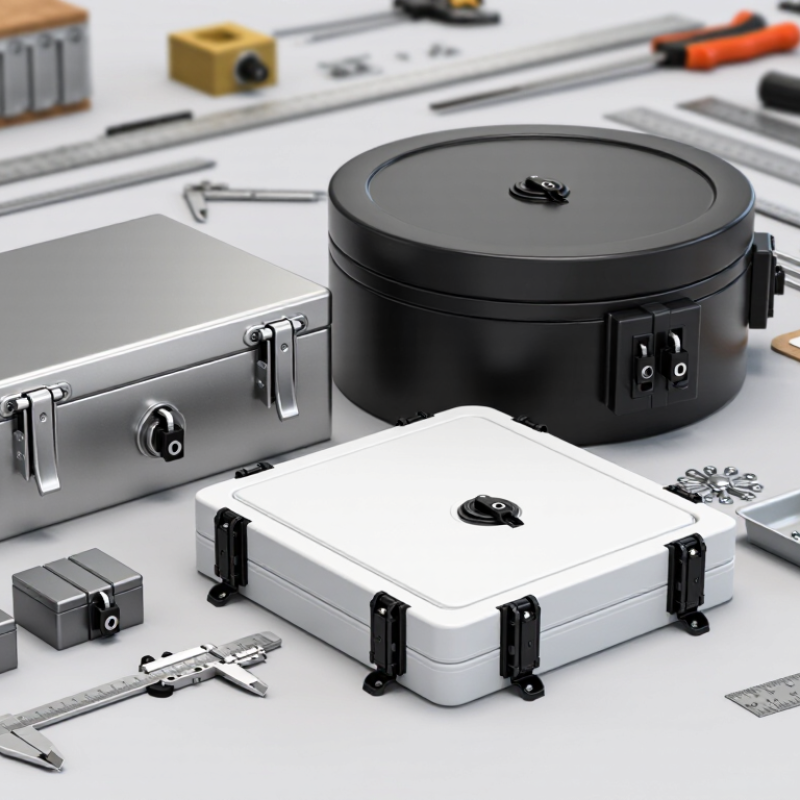
A child-proof metal box is more than a steel container with a tight lid. It is designed to resist opening by young children while remaining usable for adults. That distinction matters. No box is completely child-proof.
The lid, hinge, and locking mechanism must work together. Some designs require a deliberate press-and-turn motion; others use a concealed release. The mechanism should resist small, uncoordinated hands without demanding excessive force from adults. Smooth edges, sturdy hinges, and a lid that closes fully also affect everyday safety. A loose latch can undermine an otherwise solid box.
Material thickness alone does not define quality. Manufacturers should assess opening effort, repeated-use wear, and performance across production batches. Testing should follow relevant child-resistance requirements for the intended market, rather than relying on appearance or a single sample. Buyers can inspect the box for uneven seams, rattling parts, and inconsistent closure. These checks are useful, though they cannot replace proper testing. Design involves trade-offs: a more complex lock may frustrate caregivers, and even a well-made mechanism can wear over time.
A well-designed child-proof metal box should resist casual opening without creating sharp edges or pinch points. Look for a recessed latch, smooth hinges, and rounded corners. The lid should close securely, but adults should still be able to open it without excessive force. “Child-proof” does not mean impossible for every child to open. Supervision remains important.
Steel offers strength and impact resistance, while aluminum is lighter and naturally resists corrosion. Check that the finish is smooth and free from peeling, especially around seams and edges. A powder-coated surface can help protect against scratches, though coating quality varies. Ask suppliers about material thickness, hinge construction, and how they test the locking mechanism. Small details matter.
Manufacturing starts with the box’s opening mechanism, not just its appearance. Engineers set sheet thickness, lid overlap, and latch travel, then cut and stamp metal blanks. Edges are deburred before the body and lid are formed. Small tolerances matter. A slightly misaligned hinge can make the release inconsistent. Assemblers fit hinges, rivets, and child-resistant closures, then check whether the lid opens and reseats reliably. Coatings are applied and cured only after fit checks, since paint buildup can affect moving parts.
Quality control should test finished boxes, not just individual components. The U.S. Consumer Product Safety Commission’s child-resistant packaging test protocol, under 16 CFR 1700.20, uses a panel of 200 children aged 42–51 months. It also evaluates adult access. These figures show why a latch that feels secure to an engineer may still fail real-use testing. Manufacturers can record closure force, cycle the hinge, inspect coating thickness, and retain batch samples for verification. Test results depend on the complete package and its instructions. A detail that is easy to overlook: production speed can expose weak spots that small pilot runs miss. That deserves a second look.
For China-based child-resistant metal box manufacturers, quality begins with a repeatable opening action. The lid should close fully, the latch should engage, and the hinge should not shift after repeated use. Small details matter. A burr at the rim or uneven coating can affect fit and operation.
Testing should follow recognized methods, not visual inspection alone. ISO 8317:2015 sets requirements and test procedures for reclosable child-resistant packages. ISO 13127:2012 describes mechanical test methods for these packages. Suppliers can document closure cycling, drop checks, component integrity, and adult usability results. The U.S. Consumer Product Safety Commission reports that about 60,000 children under five are treated in emergency rooms each year after accessing medicines. That figure makes reliable packaging more than a specification-sheet issue. A pass is not proof of perfect real-world protection.
Buyers should request test reports linked to the exact box design, material, and closure configuration. Check whether samples came from routine production, not only hand-finished prototypes. Ask how suppliers control latch dimensions and inspect worn tooling. Metal can feel sturdy, but strength alone does not establish child resistance. Tests also need clear records, trained operators, and repeatable conditions. Some variation is inevitable; unexplained variation deserves attention.
When evaluating Chinese manufacturers and suppliers of child-resistant metal boxes, look beyond polished product photos. Ask for a current specification sheet covering metal thickness, coating, dimensions, and closure design. Then request a sample. Check its edges, hinge alignment, and finish under ordinary handling. Small flaws matter.
Test the opening process repeatedly, and ask how the supplier verifies consistent performance across production batches. Request relevant test reports, inspection records, and clear details about who conducted each test.
Confirm whether custom tooling, sample fees, minimum order quantities, and lead times are stated in writing. A factory visit or independent inspection can help verify equipment and quality controls, but neither replaces product testing. Keep notes. Compare responses from several suppliers, especially when answers about materials or tolerances seem vague.
Communication is part of quality. I would also order a second sample before committing to a large production run; one good sample may not represent every batch. Allow time to clarify packaging, shipping terms, and responsibility for defects before placing an order.