
How to Choose the Right Carbonless Paper Roll Supplier
Choosing a Carbonless Paper Roll supplier is a practical decision, not just a price comparison. A roll may look fine in a sample, then feed unevenly through a printer or produce faint copies during a busy shift. Buyers should check paper weight, roll width, core size, coating consistency, winding direction, and packaging. Ask for a production sample and test it on the actual equipment. Small details matter.
The Food and Agriculture Organization’s 2023 forest-products report recorded about 401 million tonnes of global paper and paperboard production in 2022. That figure describes the wider paper sector, not carbonless paper alone. It offers useful context, but it cannot confirm a supplier’s quality or capacity. For that, request current specifications, batch records, and clear lead-time commitments. A supplier’s answers should be specific. “We meet your needs” is not enough.
A credible introduction should also use a verified, attributable expert quotation. No source material was provided to confirm a named Carbonless Paper Roll specialist’s exact words, so assigning a quote would risk misrepresentation. Verify any quotation before publication. Then compare suppliers on sample performance, defect handling, minimum order quantities, and communication. One overlooked issue can become a costly production delay. Good sourcing is careful, and sometimes imperfect; test, document, and review before committing to a large order.
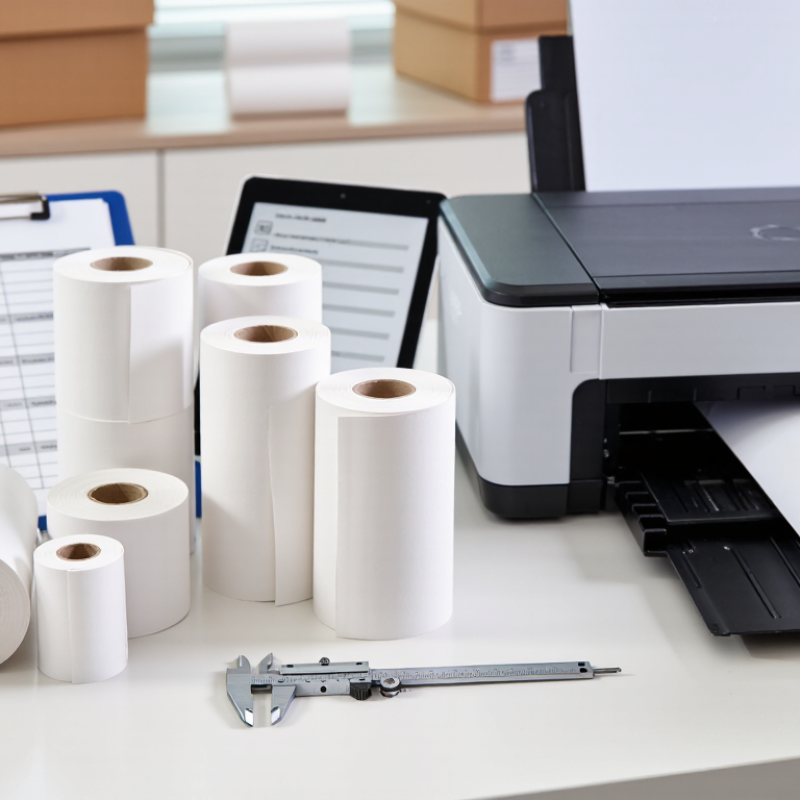
Table of Contents [Hide]
Identify Your Carbonless Paper Roll Requirements
Identify the form before comparing carbonless paper roll suppliers. A cash register receipt, delivery record, and service invoice may need different paper constructions. Note how many copies each transaction requires. Two-part forms usually use a top sheet and one transfer sheet; three-part forms need two transfer layers. More copies can require greater attention to print pressure and image clarity.
Check the printer’s specifications, not just the paper width. Measure the roll width and core diameter, then confirm the maximum roll diameter the printer accepts. Ask whether the paper’s coating sequence matches the form layout, such as a white top sheet followed by yellow and pink copies. If the printer uses impact printing, test whether writing pressure transfers a legible image to every sheet. Small details matter.
Estimate daily usage and the length of each roll to avoid frequent changes or excess stock. Ask for sheet weight, roll length, and recommended storage conditions; heat and humidity can affect image quality over time. A sample roll is useful. Test it in the actual printer and inspect the copies under ordinary lighting. Requirements can change after a real-world trial, so leave room to revise the order rather than specifying every detail too early.
How to Choose the Right Carbonless Paper Roll Supplier – Identify Your Carbonless Paper Roll Requirements
| Requirement | Example Specification | What to Confirm with the Supplier |
|---|---|---|
| Application | Point-of-sale receipts, delivery records, or multi-part business forms | Confirm that the paper and coating combination suits the intended form and writing or printing process. |
| Number of plies | Two-ply or three-ply roll, as required by the form | Specify the number of plies and the sequence of colored copies. A common three-ply construction uses CB, CFB, and CF sheets. |
| Coating sequence | CB top sheet; CFB middle sheet; CF bottom sheet for a three-ply set | Ask the supplier to identify the coating type and position for every ply, and provide a sample for transfer testing. |
| Paper color | White top copy with colored lower copies, selected to match the form design | Confirm the exact color for each ply and approve a physical sample, since color appearance can vary between paper lots. |
| Basis weight | For example, 50 g/m² per ply, subject to equipment and application requirements | Specify the required basis weight for each ply separately. Confirm the tolerance and test method in the purchase specification. |
| Roll width | For example, 76 mm finished width | Provide the required finished width and acceptable tolerance. Check compatibility with the printer or form-handling equipment. |
| Roll length and outside diameter | Set the length or maximum roll diameter to suit the machine | Confirm how roll length or diameter is measured, and whether the specified size includes the core. |
| Core dimensions | Specify core inside diameter, core width, and material | Match the core to the machine spindle. Do not rely on a nominal size without confirming the actual dimensions. |
| Printing compatibility | Thermal, impact, or other process as applicable to the equipment | Verify that the selected carbonless construction works with the printing method; carbonless paper is not automatically thermal paper. |
| Image transfer and legibility | Clear, readable copies under the intended writing or printing pressure | Test the full set with the intended printer or writing method. Check image clarity on each copy, including the last ply. |
| Roll winding and edge quality | Even winding, cleanly slit edges, and no visible telescoping or loose layers | Request sample rolls and agree on inspection criteria for winding, slitting, and roll stability. |
| Packaging and storage | Protective wrapping and cartons suitable for transport and storage | Ask how the rolls are protected from moisture, dirt, and physical damage. Follow the supplier’s storage guidance. |
| Quality documentation | Written product specification and lot identification | Confirm which test results, inspection records, or conformity documents are available for each order. |
| Sampling and approval | Pre-production or production samples approved before repeat ordering | Agree on sample quantity, approval criteria, and how an approved reference sample will be retained. |
| Order and delivery requirements | Required quantity, delivery schedule, and shipment packaging stated in the inquiry | Request the supplier’s lead time, minimum order quantity, and process for handling delays or nonconforming rolls. |