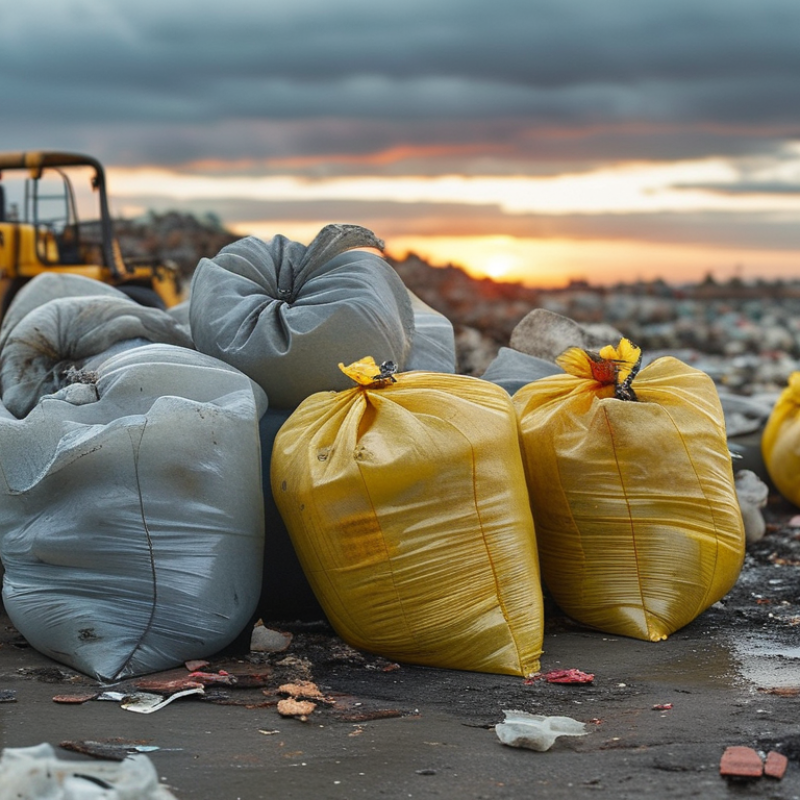
10 Debris Bag Buying Tips for Global Buyers

Buying a Debris Bag is not simply choosing the lowest quoted price. It is a risk decision involving weight, weather, handling, transport, and disposal.

The United States Environmental Protection Agency reported approximately 600 million tons of construction and demolition debris in 2018. UNEP’s Global Waste Management Outlook 2024 estimates that global municipal waste may reach 3.8 billion tonnes annually by 2050. These figures reveal the scale. They also expose a practical problem: weak bags can create secondary waste, delays, and avoidable cleanup costs.

On active sites, the seam often fails before the fabric. A sharp brick corner can punish an under-specified bag. Rain can expose poor coating quality. Forklift handling can tear weak lifting loops. Small details matter.

Circular-economy expert William McDonough states, “Waste equals food.” His principle encourages buyers to examine a bag’s entire life cycle, not only its first use. Can it be reused? Is the material clearly identified? Can suppliers provide test records and consistent batch quality?

This guide presents ten buying tips for global purchasers. It examines fabric strength, load capacity, dimensions, lifting design, moisture protection, UV resistance, closures, packaging, documentation, and supplier reliability. It also considers shipping efficiency and local disposal requirements.

Some choices remain imperfect. A heavier bag may last longer, yet increase freight emissions. A cheaper option may protect budgets, yet fail during lifting. The right decision depends on the debris, handling equipment, climate, and project schedule. Clear specifications reduce guesswork. Better questions usually produce better bags.

10 Debris Bag Buying Tips for Global Buyers

Define the Debris Bag’s Intended Use and Required Specifications

Define the Debris Bag’s Intended Use and Required Specifications

A debris bag should match the waste, not merely the buyer’s budget. Construction rubble needs stronger fabric and reinforced lifting loops. Dry leaves require less puncture resistance but more volume. Wet soil creates a different problem. It becomes much heavier than expected.

Start by estimating the debris type, weight, and daily volume. Check the bag’s rated capacity, dimensions, seam construction, and lifting method. A bag designed for light packaging may split under sharp tile pieces. Measure the available storage area too. A tall bag may hold more, but it can become unstable during loading. In my experience, buyers often focus on volume and overlook safe handling space.

Tips: Request samples before placing a large order. Fill one with the intended material and inspect its seams, handles, and base. Test it on a rough surface, not a clean showroom floor. Ask for material details, load ratings, moisture resistance, and inspection records. Confirm whether specifications use kilograms, pounds, or another measurement system. Small unit differences can create costly misunderstandings. If the bag will be reused, state the expected cycle count. That requirement may change the fabric and stitching. Some choices still require review after a field trial. Initial assumptions are not always right.

Choose the Right Material, Strength, and Size

10 Debris Bag Buying Tips for Global Buyers

Choose the Right Material, Strength, and Size

Material affects safety, handling, and service life. For dry construction waste, woven polypropylene offers useful tear resistance. Paper bags may suit lighter, clean debris and easier recycling routes. For damp materials, check whether the bag has a moisture-resistant inner layer. Do not assume “heavy duty” means unlimited strength.

Study the load rating. A bag holding 25 kilograms should not be filled with 40 kilograms. Check seam quality, handle attachment, and bottom construction. A weak handle can fail while workers carry broken tiles or sharp wood. Samples reveal more than product photos. Test one with real debris before placing a large order. That step costs time, but it can prevent a costly mistake.

Size must match both volume and lifting ability. A very large bag may hold more waste, yet become unsafe when fully loaded. Measure the storage area, truck opening, and lifting equipment. Confirm the bag’s flat dimensions and usable capacity. Closure options also matter. Drawstrings help control loose dust, while open-mouth designs allow faster filling. Consider local weather, warehouse conditions, and disposal practices. Specifications should state material, thickness, dimensions, weight limit, and packaging clearly. I once underestimated handle comfort; the bag met its rating but was awkward to move. Real workers notice details buyers may miss.

Evaluate Capacity, Handling Features, and Loading Safety

10 Debris Bag Buying Tips for Global Buyers

Choose capacity by material density, not volume alone. A 1,000-liter bag filled with wet concrete becomes dangerously heavy. The NIOSH Revised Lifting Equation uses 23 kilograms as its ideal load constant, but debris handling is rarely ideal. Workers bend, twist, and lift from uneven ground. Select bags with a clearly marked safe working load, not only a maximum volume.

1

Tip 1

Test the base, seams, and lifting loops with a controlled sample load. Handles should remain upright without cutting into gloves. Four lifting loops can improve balance during hoisting, but only when the load is evenly distributed. Avoid overfilling. Sharp metal, broken glass, and timber ends need inner protection or separate containers.

2

Tip 2

Check loading height and access. A wide opening reduces awkward reaching, while a stable closure limits falling debris during transport. Wet waste deserves extra caution. It can shift suddenly and add substantial weight. Eurostat reports that construction and demolition waste represents more than one-third of waste generated in the European Union. That scale makes small handling mistakes expensive.

Still, bag design alone cannot remove every risk. Confirm site procedures, lifting equipment compatibility, and local safety requirements before purchase. Personally, I would reject any bag whose capacity label is vague. Clear markings are not decoration; they support safer decisions.

Check Compliance, Customization, and Environmental Requirements

When buying debris bags internationally, compliance should guide the specification, not follow it. Confirm the bag’s intended use, load rating, dimensions, closure method, and material composition. Ask for test reports, safety data, and batch documentation from the supplier. Import rules may differ by destination, especially for packaging waste and recycled materials. Check labeling, language, recycling marks, and required product declarations before production.

Customization affects both performance and compliance. A thicker bag is not always better; it may increase cost and reduce recycling efficiency. Match thickness to sharp rubble, wet garden waste, or lightweight renovation debris. Test seams, handles, and bottom panels with realistic loads. Request samples with the final printing and closure design. Small changes matter. A handle that works in a showroom may tear beside a concrete pile.

Environmental requirements need careful verification. Ask whether recycled content is post-consumer or industrial scrap, and request supporting evidence. Do not assume “biodegradable” means suitable for every disposal system. Confirm recyclability in the target market, ink limitations, and any restrictions on additives. A reusable option may reduce waste, but only when its longer service life is realistic. My own buying checklist would include an independent inspection, although inspections cannot replace local regulatory advice. Leave room for revision after field testing; the first specification is rarely perfect.

Compare Suppliers, Samples, Pricing, and Delivery Terms

10 Debris Bag Buying Tips for Global Buyers

Compare Suppliers, Samples, Pricing, and Delivery Terms

Global buyers should compare more than quoted unit prices. UNEP’s Global Waste Management Outlook 2024 estimates that municipal waste will rise from 2.3 billion tonnes in 2023 to 3.8 billion tonnes by 2050. Demand is growing, but specifications still decide performance. Ask each supplier for material grade, bag dimensions, thickness tolerance, seam method, load rating, and test records. Relevant checks include tensile strength, puncture resistance, leak protection, and handle durability. Do not trust a sample alone. It may be specially selected.

Request samples from at least three suppliers. Fill them with the intended debris, then drag, stack, and store them outdoors. Record tearing, odor, stretching, and water exposure. Small details matter. A 100-micron bag can perform poorly if the seam is weak. For household waste applications, buyers can also review EN 13592 requirements where applicable. Supplier audits, production photos, and batch records improve reliability, although paperwork can be incomplete.

Compare pricing on a landed-cost basis. Include packaging, mold charges, inspection fees, freight, duties, and replacement allowances. A cheaper quote may become expensive after delivery. Confirm the minimum order quantity and price breaks in writing. Delivery terms deserve equal attention. Specify production lead time, shipment window, port responsibility, insurance, and remedies for delays. Build a buffer for customs and seasonal congestion. I have seen “ready stock” become a two-week wait. That assumption needs challenging. Payment terms should match inspection stages, not promises.

10 Debris Bag Buying Tips for Global Buyers - Compare Suppliers, Samples, Pricing, and Delivery Terms

# Buying Dimension What to Compare Typical Reference Data or Requirement Questions to Ask Suppliers Common Red Flags
1 Bag Material Compare woven polypropylene, low-density polyethylene, high-density polyethylene, and recycled-content options. Woven polypropylene is commonly selected for rubble, soil, and construction waste because of its tear resistance. Polyethylene bags are generally better suited to lightweight or wet household and renovation waste. Confirm whether the material is virgin, recycled, or a blend. What is the polymer type and recycled-content percentage?
Is the material suitable for sharp, abrasive, or damp debris?
Can the supplier provide a material or composition declaration?
Vague descriptions such as “heavy plastic” without polymer identification, recycled-content details, or supporting documentation.
2 Dimensions and Capacity Compare flat size, finished size, volume, usable load, and packaging quantity. Common contractor and debris-bag sizes include approximately 55–75 cm width and 90–120 cm length. Actual capacity depends on bag shape, gusset design, material thickness, and the type of debris. The stated load should be based on a defined test method rather than volume alone. Are the dimensions measured flat or after forming?
What is the recommended maximum fill weight and volume?
Are gussets, handles, or lifting loops included?
Dimensions are listed without tolerances, usable capacity, or a clear distinction between flat and finished measurements.
3 Strength and Performance Compare tensile strength, tear resistance, seam strength, puncture resistance, and drop performance. For construction debris, strength is affected by fabric denier, weave density, coating, thickness, seam construction, and handle design. Ask for test results using defined standards such as ISO 21898 for flexible intermediate bulk containers where applicable, or an agreed internal test method for smaller bags. Which test method and sample conditioning were used?
What are the minimum seam and lifting-loop strengths?
Has the bag been tested with sharp or irregular debris?
A high load claim is provided without test conditions, sample size, failure criteria, or a written specification.
4 Closure and Handling Design Compare drawstrings, tie tops, sewn hems, open-mouth designs, handles, lifting loops, and dust-control features. Tie-top or drawstring closures help contain loose waste, while open-mouth bags are faster to fill. Four lifting loops or reinforced handles may improve handling of heavier loads, but the safe working load must be specified and tested. Is the closure reusable after opening?
Are handles reinforced separately from the main seam?
What is the safe lifting method and maximum load?
Handles are attached only to a thin film layer, or lifting instructions are missing for bags marketed for heavy debris.
5 Sample Evaluation Compare pre-production samples, production-equivalent samples, and samples tested under actual use conditions. Request at least 3–5 samples from the proposed production specification. Check dimensions, weight, seams, handles, closure performance, odor, print quality, and resistance to puncture. Where possible, conduct a controlled fill, lifting, stacking, and drop test using the intended debris. Is the sample made on the same production line and with the same material?
Can the supplier provide a signed sample specification?
What happens if mass production differs from the approved sample?
Only laboratory swatches or unbranded prototypes are offered, with no production-equivalent sample or approval record.
6 Indicative Pricing Compare unit price, tooling or setup charges, packaging, inspection, inland transport, freight, duties, and payment costs. As a broad market reference, simple polyethylene contractor bags may range from about US$0.10–0.60 per piece, while reinforced woven polypropylene debris bags commonly range from about US$0.40–2.50 per piece. Heavy-duty lifting bags can cost more. Actual prices vary substantially with size, fabric weight, order quantity, printing, testing, and trade terms. Is the quotation based on EXW, FOB, FCA, CIF, or DDP terms?
Are printing plates, cartons, pallets, inspection, and export documents included?
How long is the quoted price valid?
The lowest unit price excludes packaging, inland transport, testing, tooling, or destination charges and cannot be reconciled into a landed-cost calculation.
7 Minimum Order Quantity Compare minimum order quantity by size, color, material, print design, and shipment. Stock products may be available in quantities from several hundred or several thousand pieces. Custom dimensions, colors, woven fabric, and printed packaging often require several thousand pieces or more because of material setup and production planning. Is the MOQ applied per item, color, size, or total order?
Can different sizes be combined in one shipment?
Is a pilot order available at a higher unit cost?
The supplier gives one general MOQ but later adds separate minimums for each size, color, print, or packaging format.
8 Quality Control and Compliance Compare incoming-material checks, in-process inspections, final inspection, traceability, and destination-market requirements. A practical inspection plan should cover dimensions, bag weight, fabric or film thickness, seam condition, handle attachment, closure function, appearance, packaging count, and random load testing. For recycled materials or regulated markets, request relevant declarations and test reports. What are the acceptance limits and inspection level?
Can the supplier provide batch numbers and inspection records?
Are reports from an independent laboratory available when required?
The supplier relies only on a general certificate, refuses batch traceability, or cannot define measurable acceptance criteria.
9 Production and Delivery Time Compare sample lead time, production lead time, booking time, transit time, customs clearance, and buffer time. Stock samples may be dispatched within approximately 3–7 working days. Custom samples commonly require about 7–20 working days, and regular production often takes approximately 20–45 working days after approval and deposit. International transit may add roughly 5–45 days depending on transport mode and route. When does the lead time start: deposit, artwork approval, or sample approval?
What is the earliest confirmed ship date?
How are delays, partial shipments, and peak-season capacity handled?
A delivery promise is given without a production schedule, confirmed shipping window, or allowance for inspection and customs.
10 Trade Terms and Landed Cost Compare Incoterms, freight method, insurance, documentation, payment schedule, claims procedure, and total delivered cost. FOB or FCA terms may provide clearer control over international freight, while CIF includes main carriage and insurance to the named destination port but normally excludes import clearance and inland delivery. DDP may simplify purchasing but requires careful verification of tax, customs, and importer-of-record responsibilities. Which Incoterms 2020 rule and named place are included?
Who is responsible for export clearance, import duties, taxes, and unloading?
What evidence is required for shortages, damage, or quality claims?
The quotation uses “door delivery” or “shipping included” without stating the named destination, tax treatment, insurance scope, or responsibility for customs clearance.
Pricing and lead-time note: The price and delivery figures are indicative planning ranges for international procurement, not fixed market quotations. Final costs depend on material, dimensions, load rating, order quantity, packaging, destination, inspection requirements, freight conditions, and the agreed Incoterms 2020 rule.

Article Source:

Scroll to Top