Top 5 Innovative Carton Packaging Solutions for Sustainable Business Growth
In an era where sustainability is paramount, businesses are increasingly turning to innovative carton packaging solutions as a means to drive growth while minimizing their environmental impact. According to the Smithers report on sustainable packaging, the global market for eco-friendly packaging is projected to reach $500 billion by 2027, highlighting the crucial role carton packaging plays in this transformative journey. As companies strive to meet consumer demand for greener alternatives, the adoption of innovative carton options not only enhances brand reputation but also opens new avenues for operational efficiency.

Leading industry expert, Dr. Sarah Thompson, a renowned figure in sustainable packaging, emphasizes, "The future of carton packaging lies in its adaptability and innovation. Companies must embrace new materials and designs to stay ahead." This insight underscores the necessity for brands to rethink their packaging strategies and integrate sustainable practices into their operations. By exploring cutting-edge carton packaging solutions, businesses can not only align themselves with global sustainability goals but also foster long-term growth.
As we delve into the top five innovative carton packaging solutions, it is evident that these advancements are not just trends, but essential practices for thriving in today's eco-conscious market. Through strategic implementation of these systems, businesses can ensure that their packaging choices contribute positively to both their bottom line and the environment.
Emerging Trends in Sustainable Carton Packaging: Market Insights and Consumer Preferences
The demand for sustainable carton packaging is rapidly growing as consumers become more environmentally conscious. Recent market insights reveal a shift in consumer preferences toward products that utilize eco-friendly materials and practices. Companies are responding by innovating their packaging solutions to enhance recyclability, reduce carbon footprints, and utilize renewable resources. This trend is not only beneficial for the environment but also aligns with the values of a younger, more sustainability-minded audience.
Emerging trends in the packaging market highlight the integration of technology to improve sustainability. Smart packaging solutions, like QR codes and augmented reality, provide consumers with information on recycling processes and the environmental impact of their choices. Additionally, brands are investing in lightweight materials that maintain product integrity while minimizing waste. Such innovations not only facilitate sustainable business growth but also foster stronger consumer engagement, allowing brands to stand out in a competitive landscape by appealing to eco-conscious values.
Innovative Materials in Carton Packaging: Biodegradable and Recyclable Options Driving Change
In today's rapidly evolving market, the push for sustainable practices has led to significant innovations in carton packaging. One of the most promising advancements is the development of biodegradable materials, which offer a viable alternative to traditional packaging solutions. These materials decompose naturally in the environment, reducing landfill waste and minimizing ecological impact. The incorporation of plant-based polymers and fibers in carton design is not only environmentally friendly but also appealing to consumers who prioritize sustainability in their purchasing decisions.
Moreover, recyclable options are gaining traction as companies seek to close the loop in their packaging processes. By utilizing materials that can be effectively recycled, businesses can significantly reduce the carbon footprint associated with their packaging. Innovations such as water-based inks, uncoated paperboard, and easy-to-separate components enable consumers to recycle packaging efficiently. As awareness of environmental issues grows, adopting recyclable carton packaging not only helps firms meet regulatory requirements but also fosters brand loyalty among eco-conscious consumers, ultimately driving sustainable business growth.
Top 5 Innovative Carton Packaging Solutions for Sustainable Business Growth
| Solution |
Material Type |
Sustainability Feature |
Key Benefit |
| Mushroom Packaging |
Agricultural Waste |
Biodegradable |
Compostable and sustainable alternative to Styrofoam |
| Recycled Cardboard |
Post-consumer Paper |
Recyclable |
Reduces waste and promotes circular economy |
| Plant-based Inks |
Soybean and Vegetable Oils |
Low-VOC |
Safer for the environment and improves recyclability |
| Water-soluble Packing |
Polyvinyl Alcohol (PVA) |
Biodegradable |
Reduces plastic pollution, dissolves in water |
| Smart Packaging |
Recyclable Polymers |
Interactive Features |
Enhances consumer engagement and reduces waste |
Technological Advancements: Smart Packaging Solutions Enhancing Logistics Efficiency
The evolution of logistics has been significantly influenced by
technological advancements in packaging, marking a pivotal shift towards
sustainability. The
corrugated boxes market is anticipated to reach
USD 254.4 billion by 2033, fueled by the growth in
e-commerce and the increasing demand for
environmentally friendly packaging solutions. Smart packaging technologies,
such as active labels and intelligent sensors, are enhancing product protection and consumer engagement,
driving efficiency across supply chains.
Tips for Implementing Smart Packaging Solutions:
- Consider integrating IoT technologies to monitor
real-time conditions, improving product tracking and minimizing spoilage, particularly in perishable goods.
- Utilize advanced analytics to
assess consumer interaction and optimize packaging designs based on feedback, leading to a more tailored product experience.
With a growing emphasis on sustainability, the reusable packaging market is
predicted to hit USD 190.1 billion by 2030, showcasing businesses'
commitment to eco-friendly practices. As industries adopt these innovative packaging solutions, they not only
improve logistics efficiency but also position themselves as leaders
in sustainability initiatives.
Case Studies: Successful Brands Leveraging Eco-Friendly Carton Packaging for Competitive Advantage
In the landscape of sustainable business growth, innovative carton packaging solutions play a pivotal role. Forward-thinking brands are increasingly recognizing the competitive advantage that eco-friendly packaging can offer. For instance, recent case studies illustrate how companies have successfully adopted sustainable carton packaging to not only reduce waste but also enhance their brand image and consumer loyalty.
When considering the implementation of eco-friendly packaging, businesses should focus on understanding consumer priorities, which can vary widely across different markets. This granular approach enables brands to tailor their packaging strategies effectively. Tips for brands looking to innovate their packaging include investigating biodegradable materials, leveraging design for reuse and recycling, and maintaining transparency about sustainability efforts to build trust with consumers.
Moreover, the shift towards sustainable practices is not merely a trend but a necessary evolution in response to the growing demand for environmentally responsible products. Companies that prioritize sustainable packaging solutions will likely find themselves ahead in a competitive market, as consumers increasingly make choices based on environmental impact. By embracing innovation in carton packaging, businesses can drive both sustainability and growth.
The Economic Impact of Sustainable Packaging: Cost-Benefit Analysis and Market Growth Projections
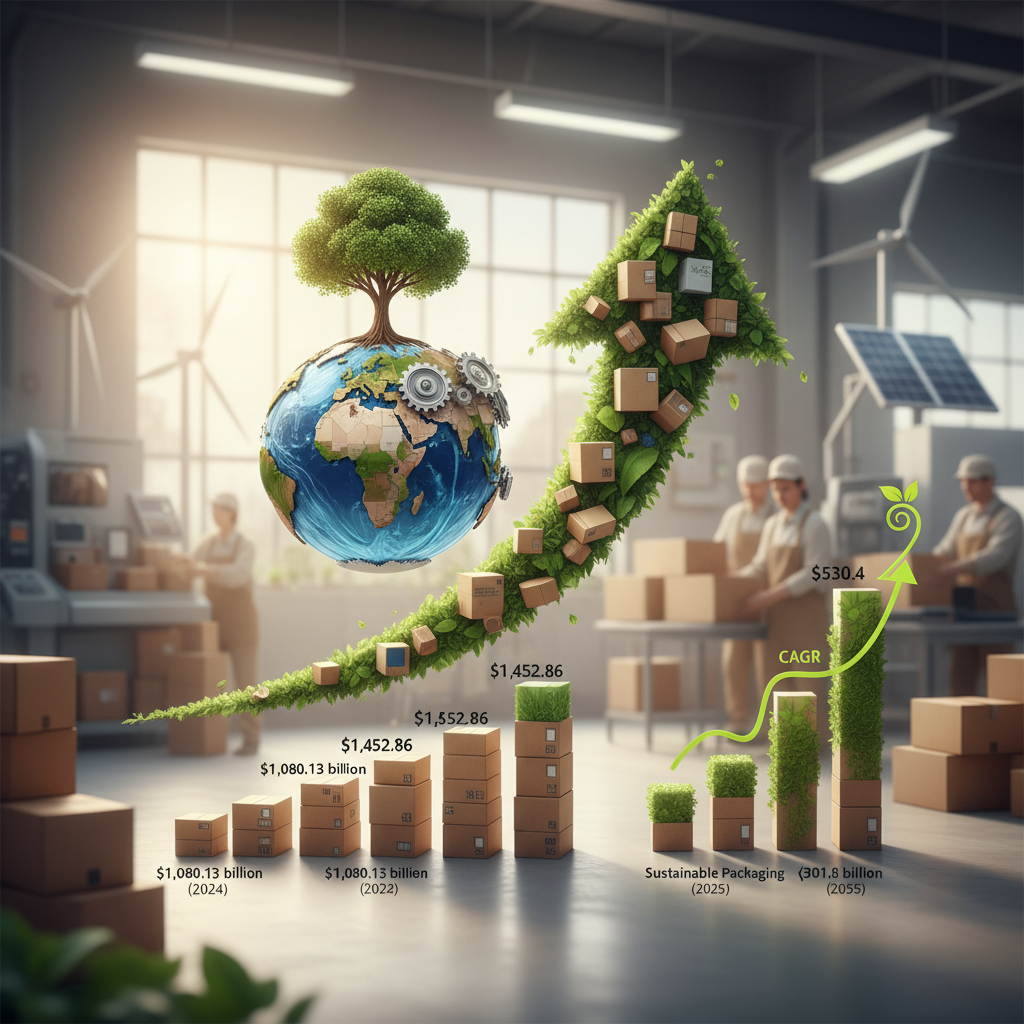
The economic impact of sustainable packaging is increasingly evident as businesses strategically shift towards environmentally friendly solutions. The global packaging market, valued at approximately $1,080.13 billion in 2024, is anticipated to expand from $1,109.44 billion in 2025 to an impressive $1,452.86 billion by 2032. A significant segment of this growth is fueled by the sustainable packaging market, projected to soar from $301.8 billion in 2025 to $530.4 billion by 2035, highlighting a robust CAGR of 5.8%. This growth reflects not only consumer demand for greener options but also the economic advantages of incorporating sustainable practices into packaging strategies.
Moreover, the food packaging industry stands at a crossroads, facing substantial environmental challenges due to its reliance on plastics amidst a growing call for convenience. The global sustainable food packaging market mirrors the broader trend, with projections indicating growth from $301.8 billion in 2025 to $530.4 billion by 2035. As companies embrace innovations in sustainable packaging, they are not only addressing regulatory pressures and consumer preferences but also unlocking significant cost savings that stem from increased efficiency and reduced material waste. This strategic pivot towards sustainability offers a promising pathway for business growth, enhancing both brand reputation and profitability.