
Top Flexible Packaging Suppliers in 2026
Flexible packaging has become a practical choice for food, personal care, household, and medical products. Its lighter weight and adaptable formats can reduce shipping bulk and make storage easier. Yet a pouch that looks simple on a shelf may depend on precise film layers, barrier properties, seals, and filling-line settings. A 250-gram coffee pouch, for example, needs different protection from a refill pack for liquid soap. Small specification gaps can cause costly production delays.
This guide to the top flexible packaging suppliers in 2026 is designed to help buyers compare capabilities, not just polished claims. It considers material options, printing quality, converting capacity, technical support, lead times, and experience with formats such as stand-up pouches, rollstock, and recyclable-ready structures. Sustainability deserves careful scrutiny. A package described as recyclable may not be accepted in every local collection system, and a strong barrier rating alone does not prove that a film will perform on your equipment. Ask for current specifications, sample rolls, and trial results. Details matter.
Supplier fit also depends on order volume, product sensitivity, and the ability to scale reliably. A large manufacturer may offer broad capacity, while a regional converter may provide closer collaboration; neither is automatically the better choice. I would verify performance with real production trials, because a clean sample is not the same as a stable run. This overview offers a starting point for informed discussions, while leaving room for the questions each product and market still requires.
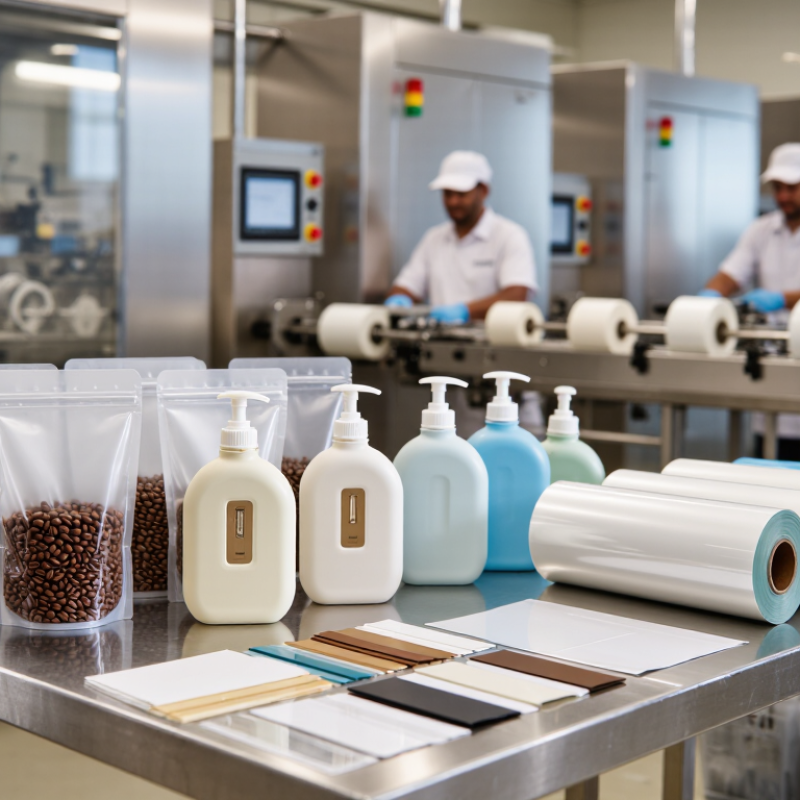
Table of Contents
[Hide]
What Flexible Packaging Suppliers Provide in 2026
In 2026, flexible packaging suppliers provide more than printed film. They help buyers choose structures, thicknesses, barrier properties, and formats such as pouches, sachets, and rollstock. They may also offer artwork preparation, converting, sealing guidance, and sample runs. The right structure depends on what the product needs: a crisp snack may require moisture protection, while a refill pouch must withstand repeated handling. Small details matter. Suppliers can test seal strength and confirm that packaging runs reliably on a customer’s filling line, though the available support varies.
Industry data shows why these services matter. The Flexible Packaging Association’s 2024 State of the U.S. Flexible Packaging Industry report estimated U.S. sales at $42.9 billion in 2023. That scale reflects broad use across food, personal care, and other consumer goods. But packaging choices involve trade-offs. The OECD’s Global Plastics Outlook reports that packaging accounted for 40% of plastic waste generated in 2019. Buyers increasingly ask suppliers for material specifications, recyclability guidance, and documentation to support their own assessments. Those answers need careful checking; “recyclable” can depend on local collection and processing. A useful supplier explains the limits, not just the benefits, and provides data that can be verified.
| Supplier Capability | Typical Products | Common Materials | Services and Converting Options | Typical Applications | Specification Considerations |
|---|---|---|---|---|---|
| Printed rollstock and laminates | Flexible film supplied on rolls for form-fill-seal and other packaging lines | Polyethylene (PE), polypropylene (PP), polyester (PET), polyamide (PA), and laminated combinations | Flexographic or gravure printing, lamination, slitting, and roll winding | Snack foods, frozen foods, confectionery, and household products | Confirm web width, roll diameter, core size, seal layer, print requirements, and compatibility with the filling equipment. |
| Stand-up and flat pouches | Stand-up pouches, flat pouches, zipper pouches, and spouted pouches | PE, PP, PET, PA, aluminum foil, and paper-based laminate structures | Printing, pouch forming, zipper or fitment insertion, and custom pouch dimensions | Food, beverages, pet food, personal care, and selected home-care products | Barrier needs, product weight, closure type, filling method, and transport conditions affect pouch design. |
| Bags and liners | Flat bags, gusseted bags, wicketed bags, and protective liners | Primarily PE films, including low-density and high-density polyethylene grades | Film extrusion, bag conversion, perforation, gusseting, and selected printing options | Produce, bakery products, retail goods, industrial components, and bulk-product liners | Specify dimensions, film thickness, closure or opening style, required strength, and food-contact requirements where applicable. |
| High-barrier packaging | Barrier films, lidding films, vacuum pouches, and retort-compatible structures | Multilayer polymer films, aluminum foil laminates, and barrier-coated films | Lamination, coating, sealing-layer selection, and conversion into rolls or pouches | Products requiring protection from oxygen, moisture, light, or aroma loss | Barrier performance depends on the full structure, package design, seals, and use conditions; request test data for the specified construction. |
| Paper-based flexible packaging | Paper pouches, paper wraps, and paper-based rollstock | Paper combined with polymer layers, coatings, or other barrier components | Printing, coating or lamination, slitting, and pouch conversion | Dry foods, bakery products, and non-food products where the package design is suitable | Paper content alone does not establish recyclability or barrier performance; verify the complete structure and local collection guidance. |
| Recyclability-oriented structures | Mono-material film and pouch designs intended to simplify material composition | Structures based mainly on PE or PP, selected for the target package and recycling stream | Material selection, print and layer design, seal testing, and format conversion | Applications where a compatible collection and recycling pathway exists | Recyclability depends on local infrastructure, package components, inks, labels, barriers, and applicable design guidelines. |
| Custom development and technical support | Application-specific film, laminate, pouch, or bag constructions | Selected from polymer films, paper, foil, coatings, and compatible sealant layers | Structure recommendations, sample production, print proofing, seal and line trials, and quality documentation | New product launches, line changes, shelf-life projects, and packaging redesigns | Provide product details, target shelf life, filling and sealing conditions, distribution needs, and relevant regulatory requirements. |
Capabilities and material suitability vary by supplier and application. Final performance, food-contact compliance, recyclability, and shelf life should be confirmed for the specific package structure and market.
Related Posts
-
How to Choose the Right Flexible Packaging Supplier
-
How to Choose the Best Flexible Packaging for Your Product Needs?
-

2026 Best Shop Packaging Ideas for Effective Business Growth?
-
2026 Best Shrink Sleeves for Packaging Solutions and Applications?
-

China Best Folding Cartons for Packaging Solutions What You Need to Know
-

How to Choose the Right Corrugated Box Supplier?