Top 5 Thermopile Sensors for Accurate Temperature Measurement?
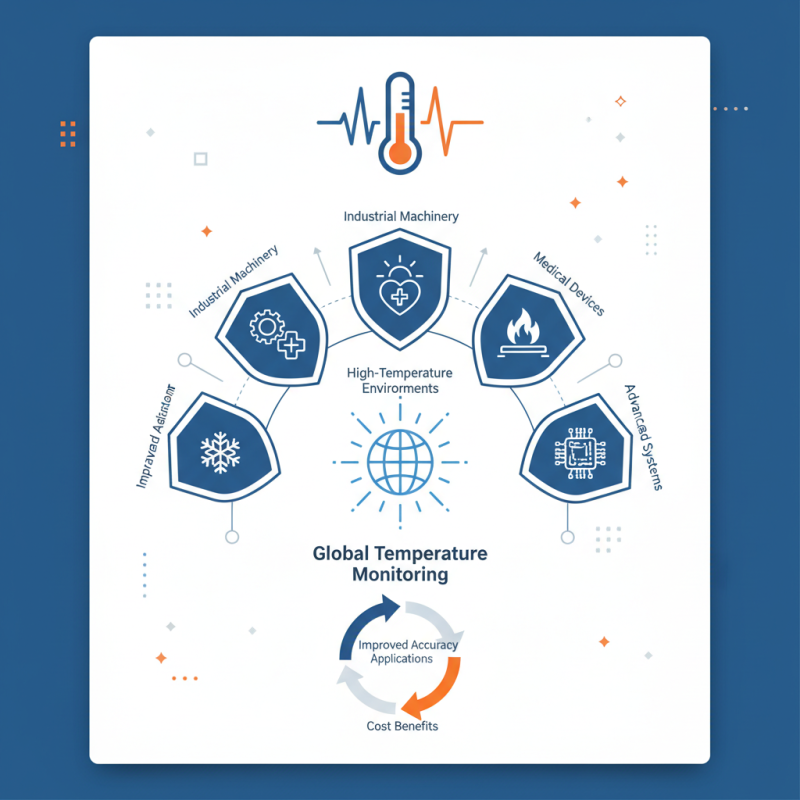
In the realm of temperature measurement, Thermopile Sensors stand out for their accuracy and reliability. Dr. Emily Carter, a thermal imaging expert, once remarked, “The precision of Thermopile Sensors can transform how industries approach temperature monitoring.” These sensors convert thermal energy into electrical signals, offering a non-contact method to gauge temperatures. This capability is vital in applications ranging from medical devices to industrial machinery.
Each Thermopile Sensor differs in sensitivity and range, making the selection process crucial. For instance, some sensors excel in high-temperature environments, while others are designed for low-energy applications. Understanding the right sensor for your needs can often feel overwhelming. The nuances between models require careful consideration.
Additionally, the rapid development of technology means that what was considered the best yesterday might not hold true today. Users must evaluate their choices continuously. This industry is dynamic, and failing to keep up can lead to missed opportunities for improved accuracy. Choosing the right Thermopile Sensor not only enhances performance but can also yield significant cost benefits over time.
Top 5 Thermopile Sensors for Accurate Temperature Measurement
When it comes to precise temperature measurement, thermopile sensors stand out. These devices convert thermal energy into electrical signals, providing accurate readings across various applications. Whether used in industrial settings or smart home systems, thermopile sensors are invaluable tools for engineers and researchers.
Selecting a thermopile sensor isn’t always straightforward. Consider the environment where it will operate. High humidity or dust may affect performance. Also, think about the required response time for your application. Some sensors may take longer to stabilize, which can lead to inaccuracies.
Tips: Regular calibration of your thermopile sensor is crucial. Dust accumulation can impact measurement accuracy. Ensure to keep the sensor clean and protected from extreme conditions.
Compatibility is another factor to keep in mind. Choose sensors that easily integrate with existing systems to avoid additional challenges. Testing various sensors in your specific context may yield better insights into their effectiveness.
Tips: Always review the technical specifications. Not all sensors will meet the high standards needed for critical applications. A thorough understanding can help avoid potential miscalculations.
Understanding Thermopile Sensors: Principles and Applications
Thermopile sensors offer a unique approach to temperature measurement. They utilize a series of thermocouples connected in series or parallel. This configuration generates a voltage in response to temperature differences. It is crucial to understand their operation for achieving accurate results in various applications.
These sensors are widely used in medical equipment, HVAC systems, and industrial processes. Their ability to measure a broad temperature range makes them versatile. However, achieving precision requires careful calibration. Environmental factors can affect readings, leading to inaccuracies. Users must be aware of these limitations.
In applications where temperature control is critical, such as in laboratories, errors can have significant implications. Proper placement of sensors is essential to minimize interference. Furthermore, the materials used in thermopile construction impact performance. Choosing the right sensor is key to success. Understanding these details is vital for anyone working with thermopiles.
Key Performance Metrics of Thermopile Sensors in Industrial Use
Thermopile sensors are essential tools in various industrial applications. They provide accurate temperature measurements. Their key performance metrics can make or break a system. Understanding these metrics can aid in better decision-making.
Accuracy is a primary factor to consider. Many sensors claim high accuracy, but real-world performance varies. A typical thermopile can achieve accuracy within 1 degree Celsius. However, external factors like ambient temperature can impact readings.
Measurement range is another crucial metric. Most thermopile sensors operate effectively from -40 to 300 degrees Celsius. This versatility makes them suitable for diverse applications, from manufacturing to HVAC systems.
Response time is often overlooked but highly relevant. A rapid response time ensures timely data collection. Many sensors respond within a few seconds, making them ideal for dynamic environments. Reliability also plays a significant role. Some sensors may suffer from drift over time, requiring recalibration.
This can introduce challenges in continuous monitoring applications. Identifying these nuances can significantly influence sensor selection and long-term performance.
Comparison of Accuracy and Response Time Among Leading Thermopile Brands
Thermopile sensors play a crucial role in precise temperature measurement across various industries, including healthcare and automation. Their accuracy largely depends on the quality of the materials used and the design principles implemented. A recent study highlighted that advanced thermopile sensors can achieve accuracy levels within ±0.5°C under optimal conditions. However, variations exist based on specific models and applications.
Response time is equally important in selecting a thermopile sensor. Industry data indicates that some leading brands demonstrate response times as quick as 100 milliseconds. This is essential for processes that require real-time monitoring. For instance, in medical applications, a delay can lead to inaccurate readings. Manufacturers constantly push the boundaries to improve specifications, but inconsistencies remain in practical scenarios. Sometimes, even well-rated sensors may underperform in fluctuating environmental conditions.
Another aspect worth noting is the calibration of these sensors. Regular calibration is necessary to maintain accuracy, yet many users neglect this task. A survey showed that nearly 30% of operators do not regularly calibrate their equipment. This oversight can lead to significant errors in temperature readings, emphasizing the need for a more disciplined approach in sensor maintenance.
Top 5 Thermopile Sensors for Accurate Temperature Measurement
| Sensor Model | Accuracy (°C) | Response Time (ms) | Temperature Range (°C) | Output Type |
| Model A | ±0.5 | 100 | -40 to 125 | Analog |
| Model B | ±0.3 | 75 | -20 to 150 | Digital |
| Model C | ±0.2 | 50 | -30 to 100 | Digital |
| Model D | ±0.4 | 120 | 0 to 200 | Analog |
| Model E | ±0.5 | 90 | -10 to 125 | Digital |
Future Trends in Thermopile Sensor Technology and Innovations
Thermopile sensors have come a long way in recent years. Innovations in materials and design are making these sensors more efficient. Their ability to measure temperature accurately is crucial in many applications. However, not all thermopiles are created equal. Some may struggle with precision in varying environments. Ongoing research aims to address these limitations. Enhanced calibration methods are being developed to improve reliability.
Future trends indicate a shift towards miniaturization. Smaller sensors will find their way into wearable devices and smart technology. This evolution could lead to unprecedented levels of temperature monitoring. However, miniaturization may lead to challenges in heat dissipation. As sensors shrink, the need for robust thermal management becomes critical. Innovations must also focus on reducing energy consumption. Lower power requirements will expand their use in battery-operated devices.
Another exciting direction involves integrating AI with thermopile sensors. Machine learning algorithms could enhance data interpretation. This would enable real-time adjustments based on environmental changes. However, ensuring data security alongside these innovations is a concern. It’s essential to develop secure frameworks for data transmission. Advancements in thermopile technology hold great potential, but careful consideration of these challenges is vital.
Top 5 Thermopile Sensors for Accurate Temperature Measurement
This bar chart represents the temperature accuracy of the top five thermopile sensors. With evolving technologies, these sensors are becoming more precise, making them suitable for various applications.