2026 Top Trends in Folding Cartons for Sustainable Packaging Solutions?
The shifting landscape of sustainable packaging is reshaping the folding cartons industry. "Sustainable packaging is not just a trend; it's a necessity," says John Smith, a renowned expert in folding cartons. His insight emphasizes the urgency for brands to adopt eco-friendly solutions.
Folding cartons are evolving rapidly. Manufacturers are now focusing on materials that are recyclable and biodegradable. For instance, innovative designs reduce material usage without compromising durability. However, this transition has its challenges. Some brands struggle to balance cost and sustainability. This raises important questions about consumer willingness to pay more for greener options.
The surge in online shopping drives the demand for folding cartons. Brands must explore how these cartons can minimize their environmental impact. Exploring alternative materials and production methods will be crucial. Embracing these changes can lead to better practices within the industry. It's a step toward a more sustainable future. But are we doing enough? The journey has just begun.

2026 Outlook: Key Trends Shaping the Folding Cartons Market
The folding carton market is evolving rapidly. In 2026, sustainability will dominate trends. Eco-friendly materials are a key focus. Brands seek to reduce their carbon footprint. This shift is essential for meeting consumer demands.
Recyclable and biodegradable materials will lead the way. Innovations in plant-based inks and coatings are emerging. However, not all materials perform equally. Some variants struggle to maintain structural integrity. Balancing sustainability and functionality is a challenge for manufacturers.
Moreover, digital printing technology is on the rise. It allows for short runs and customization without waste. Yet, scalability remains an issue for smaller companies. The gap between innovation and practical application may hinder progress. Careful considerations are needed to align eco-initiatives with market needs. As brands work towards sustainable packaging, continuous evaluation will be critical.
Sustainable Materials: The Shift to Recycled and Biodegradable Options
The demand for sustainable packaging is on the rise. Companies are increasingly turning to recycled and biodegradable materials for folding cartons. A recent report indicates that the global market for recycled packaging is expected to grow at a rate of over 5% annually. This shift reflects growing consumer preferences for eco-friendly options.
Recycling helps reduce waste, but the recycling rate for paper products remains around 66% in some regions. Not all materials are easily recyclable. Some cartons, often laminated or treated, complicate the recycling process. Biodegradable options, while promising, still face challenges. They can take months to decompose, and not all biodegradable materials are created equal.
Looking ahead, manufacturers are exploring new composites. Studies show that integrating plant-based materials can reduce carbon footprints. However, these innovations require investment and collaboration across industries. Embracing sustainable materials is vital, but there is still a long way to go.
Consumer Preferences: Demand for Eco-Friendly Packaging Solutions
Consumer preferences are shifting rapidly. Many buyers are now seeking eco-friendly packaging solutions. They want products that align with their values. Sustainable options like folding cartons are becoming more popular. This shift reflects a greater awareness of environmental issues. Consumers worry about waste and pollution. They notice how packaging affects the planet.
Folding cartons can play a vital role in this narrative. Made from recyclable materials, they often require fewer resources. Consumers appreciate these details. Yet, some still wonder about the trade-offs. Are these solutions truly as effective? How do they perform compared to traditional packaging? These questions linger but indicate a growing desire for change.
Not all folding cartons are created equal. Some may not meet durability needs. Others can still generate waste. The challenge is finding balances in design and functionality. Brands must constantly innovate. They should focus on recyclability without sacrificing quality. Packaging must evolve to cater to these changing demands.
Innovative Design: Enhancing Functionality and Sustainability in Cartons
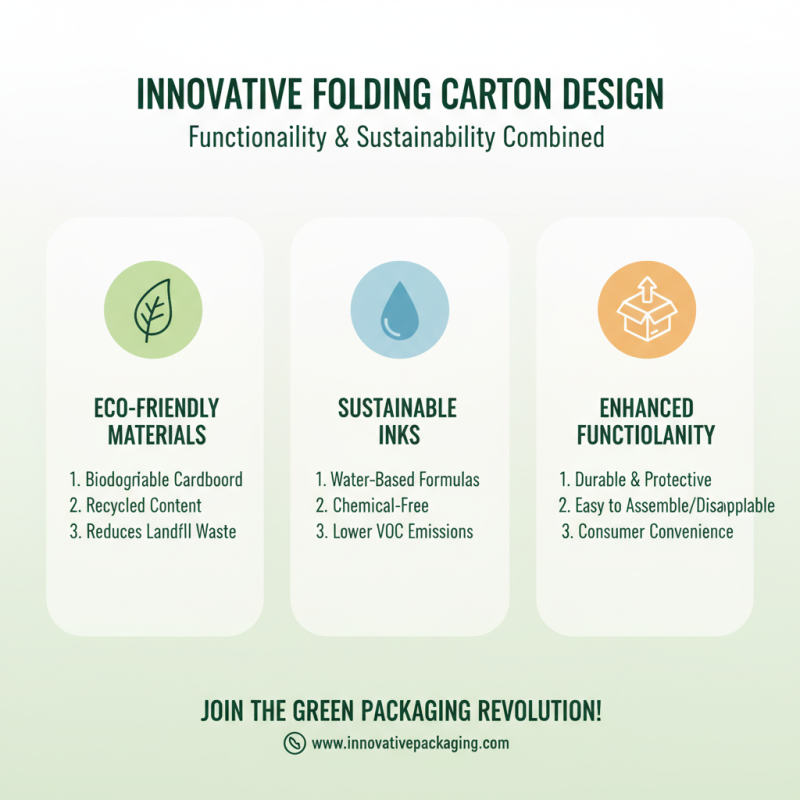
Innovative design in folding cartons has become crucial for enhancing both functionality and sustainability in packaging. Brands are seeking solutions that minimize environmental impact while maintaining product integrity. A recent trend shows the use of biodegradable materials and water-based inks, which not only reduce waste but also appeal to eco-conscious consumers. These materials break down more easily, offering a greener alternative to traditional plastic.
Designers are increasingly focused on user experience. Features like easy-open tabs and resealable closures improve usability. However, maintaining structural strength while using lighter materials can be challenging. Sometimes, a carton designed for sustainability sacrifices durability, leading to product damage in transit. This trade-off requires careful consideration and innovative engineering to strike the right balance.
Creativity in folding carton design is vital, yet there are challenges to overcome. The industry's push for sustainability can sometimes overlook practical aspects of product protection. Packaging that looks good on the shelf may not always function well in transportation. Finding the right materials while ensuring optimal performance remains a reflective journey for many designers. It's a constant reminder that sustainability and functionality must go hand in hand, without compromise.
Technological Advances: The Role of Automation in Sustainable Packaging Production
The rise of automation in packaging production is reshaping the industry. Automation reduces labor intensity, making processes faster and more efficient. It leads to better consistency in quality, which is crucial for sustainable packaging solutions. Machines can now produce folding cartons with precise dimensions, minimizing waste and maximizing raw material use.
However, there are challenges in this transition. Not all companies can invest in advanced automation technologies. Smaller businesses may struggle with the costs involved. The reliance on machines might reduce job opportunities in the sector, sparking concerns. There’s also a learning curve as employees adapt to automated systems.
Moreover, sustainability must remain a priority amid technological advances. The production process should still consider the environmental impact of materials used. Ultimately, while automation presents new capabilities, reflection on its broader implications is essential. Balancing technology and sustainability is the key to future success in packaging.