What Is Corrugated Packaging and What Types Are Available?
Corrugated packaging is the familiar brown box, but its structure does more than hold a product. It usually combines fluted paper between flat linerboards, creating cushioning and stiffness with relatively little material. That simple construction has many variations. Single-wall board suits everyday shipping; double-wall and triple-wall grades can support heavier loads. Flute profiles, including A, B, C, E, and F, also change cushioning, print surface, and thickness.
The material’s scale is measurable. The U.S. Environmental Protection Agency’s 2018 Containers and Packaging data reported that about 32.1 million tons of corrugated boxes were recycled from 33.3 million tons generated. That is a strong recovery result, though it does not make every box impact-free. Dennis Colley, president of the Fibre Box Association, has described corrugated as “the most recycled packaging material in the world.” The association’s industry perspective is useful, but packaging choices still depend on the shipment, local recovery systems, and verified performance needs.
A small box can reveal the trade-offs. A fine flute may print cleanly, while a thicker board may better protect a fragile item. More layers are not automatically better; they can add weight and material. This guide explains what corrugated packaging is, how its main types differ, and where each option fits. The details matter. EPA data reflects a specific year, and real-world results vary by design and collection access. That uncertainty deserves attention, not a footnote.

Corrugated Packaging: Definition, Materials, and Protective Function
Corrugated packaging is made from a fluted paper layer held between flat sheets called linerboard. The flutes form small arches, creating space that helps resist pressure and absorb some impact. Common materials include recycled or virgin paper fibers, water-based adhesives, and sometimes moisture-resistant coatings. The exact mix varies by grade and intended use. It is sturdy, but not invulnerable.
Single-wall board has one fluted layer and suits many everyday shipments. Double-wall board adds another fluted layer for heavier loads or rougher handling. Corrugated packaging protects goods by spreading force across its structure and limiting direct contact with bumps. Its performance depends on flute profile, board strength, box dimensions, and how closely the contents fit. A poorly sized box can still let items shift. That detail is easy to miss.
Tips: Match the board grade to the product’s weight and shipping conditions. Leave enough room for cushioning, but avoid excessive empty space. Test a packed sample if the item is fragile or the route involves repeated handling. Moisture can weaken paperboard, so storage conditions matter too. A box may look sound and still lose strength after getting damp.
How Fluting and Liners Form 3-, 5-, and 7-Ply Board
Corrugated board combines flat liner sheets with a wavy paper layer called fluting. The flutes create small air columns between the liners. These columns help cushion goods and resist crushing. A typical 3-ply board has two liners and one fluted medium. It is often used for lightweight cartons and inner packaging. Its protection depends on flute size, paper grade, and box design, not ply count alone.
A 5-ply board usually has three liners and two fluted layers. This construction can improve stacking strength and cushioning for heavier products or longer shipping routes. A 7-ply board generally uses four liners and three fluted layers. It offers added rigidity, though it is heavier and may take up more space. More layers are not automatically better. The right choice depends on product weight, shipping conditions, and how the carton will be handled.
Tips: Check a sample under real packing conditions. Place the intended product inside, stack loaded cartons, and look for crushed corners or movement. Flute profiles vary, so ask for the board’s construction details rather than relying only on a “5-ply” label. One detail is easy to overlook: excess empty space can let products shift, even in strong board.
Corrugated Board Layers by Ply Type
Corrugated board is built from flat linerboards bonded to fluted medium. Typical 3-ply board has two liners and one fluted layer; 5-ply has three liners and two fluted layers; and 7-ply has four liners and three fluted layers. These counts describe the layer structure, not a guaranteed strength rating.
Flute Profiles Compared: A, B, C, E, and F; C-Flute Is About 3.6 mm High
Corrugated packaging gets much of its strength from a fluted paper layer bonded between flat linerboards. The flute profile changes the board’s thickness, cushioning, print surface, and stacking behavior. A thicker profile is not automatically better. The right choice depends on the product, handling conditions, and box design.
A-flute is the tallest common profile, usually around 4.5 to 5 mm, and provides strong cushioning. B-flute is thinner, often about 2.5 to 3 mm, with good crush resistance and a relatively smooth surface for printing. C-flute sits between them at roughly 3.6 mm high. It is a widely used balance of cushioning and stacking strength. Measurements can vary by paper grade and manufacturing process.
E-flute, typically around 1.5 to 2 mm, creates a compact board with a neater printing surface. F-flute is thinner still, often under 1 mm, and suits small packages where fine graphics matter. Small but useful. These profiles can also be combined, such as B with C, to meet specific strength needs. Yet a chart cannot predict every shipment: humidity, box dimensions, and packing methods all affect performance. Testing a filled box under realistic conditions is often more revealing than choosing by flute height alone.
What Is Corrugated Packaging and What Types Are Available? — Flute Profiles Compared: A, B, C, E, and F
| Flute profile |
Approximate flute height |
Approximate flutes per meter |
Typical characteristics |
Common applications |
| A-flute |
About 4.5–5.0 mm |
About 105–125 |
Tall flutes provide good cushioning and stacking strength. Its thicker profile is less suited to fine surface detail. |
Protective shipping cartons and packaging for fragile goods. |
| B-flute |
About 2.5–3.0 mm |
About 150–185 |
A relatively compact profile with a good printing surface and strong resistance to crushing. It uses less interior space than A-flute. |
Retail packaging, die-cut boxes, and packaging that needs a flatter surface. |
| C-flute |
About 3.6 mm |
About 120–145 |
A widely used balance of cushioning, stacking performance, and material efficiency. Exact dimensions vary by specification. |
General-purpose shipping boxes and packaging for many consumer products. |
| E-flute |
About 1.1–1.7 mm |
About 290–320 |
Thin and compact, with a smooth surface for detailed printing and a space-efficient construction. |
Printed retail boxes, small cartons, and lightweight product packaging. |
| F-flute |
About 0.6–0.9 mm |
About 400–450 |
Very fine fluting supports a smooth printed surface and compact packaging, but provides less cushioning than taller profiles. |
Small, lightweight cartons and packaging where presentation and compactness matter. |
Note: Flute height and flute count are approximate industry ranges; actual values depend on the corrugated board specification and manufacturing process. Flute profile is only one factor in performance—liner grades, board construction, and box design also matter.
Common Box Styles: Slotted, Telescope, Folder, and Die-Cut Designs
What Is Corrugated Packaging and What Types Are Available?
Corrugated packaging uses a fluted paper layer between flat linerboards. This structure adds cushioning and stiffness without making a box excessively heavy. Box style matters just as much as board strength. A poorly matched design can waste material or make packing slower.
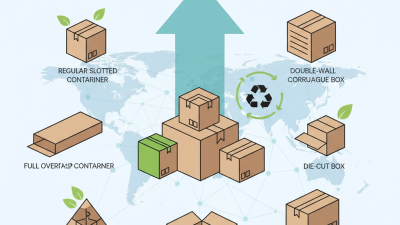
Common slotted boxes, often called regular slotted containers, have four flaps on each end. The flaps meet near the center and are usually sealed with tape. They suit many everyday shipping needs. Telescope boxes use separate top and bottom sections that slide together. Their adjustable overlap can help protect taller or fragile items. Folder-style boxes fold around a product, often using one connected sheet. They work well for flat goods, such as books or framed prints. Die-cut designs use shaped cuts and creases for a closer fit, tuck-in closures, or display windows. They can reduce movement, though intricate cuts may need careful setup. A neat drawing does not guarantee a perfect fit; board thickness and product dimensions still matter.
Tips: Measure the packed item, not just the product. Leave room for padding where needed. Test a sample with the actual contents before ordering a large run. Even small changes in humidity can soften corrugated board.
Board Strength Ratings: What 32 ECT Means in Edge-Crush Testing
Corrugated packaging is made from linerboard bonded to a fluted inner layer. The flutes create space between the flat sheets, helping the board resist compression and cushioning impacts. For shipping boxes, edge-crush testing (ECT) measures how much force a short section of board can withstand when pressure is applied to its edge. TAPPI T 811 describes this edgewise compression test.
A 32 ECT rating means the board withstands 32 pounds-force per inch of specimen width under the test conditions. It does not mean the finished box can hold only 32 pounds. The Fibre Box Association’s ECT guidance commonly pairs 32 ECT with 200-pound burst-strength board in industry specifications. These ratings come from different tests, though, and are not interchangeable guarantees. Box size, humidity, stacking time, and rough handling all affect real-world performance. I still find ECT easy to overread: it is one useful measure, not a promise about every shipment.
Tips: Match the rating to the box’s dimensions and expected stacking conditions. Check the supplier’s test documentation, and consider a filled-box compression test if loads are heavy or storage is humid. A damp warehouse can change the outcome.