Choosing a packaging manufacturer in China is not just a price comparison. Buyers also need to assess production consistency, material options, communication, lead times, and quality controls. A sample may look perfect under a showroom light, yet reveal weak seals or uneven print after a longer production run. Details matter.
For this guide to the Top 10 Packaging Manufacturers in China for Global Buyers, we focus on practical questions: What products does each manufacturer make? Can it support customization and repeat orders? Are its capabilities and claims clear enough to verify? Lin Wei, a packaging sourcing specialist at you packaging, puts the point simply: “A reliable supplier proves consistency before promising scale.” Treat that as a sourcing principle, not a substitute for checking documents, samples, and factory information.
Good questions first. Ask how specifications are confirmed, how defects are handled, and what changes could affect delivery. Request samples that match the intended order, not merely a similar item. Where relevant, confirm that materials and product documentation meet the requirements of your destination market. This list can help narrow the field, but it cannot guarantee a perfect fit. A ranking may miss a factory’s latest changes, and a polished website can leave gaps. Take time to verify. Compare evidence, not just promises.
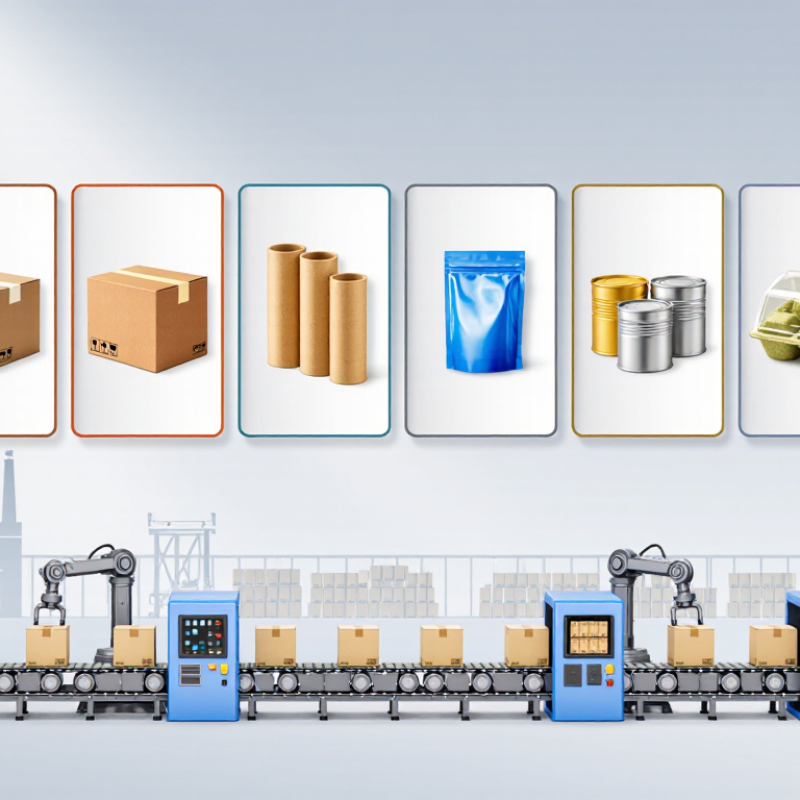
China’s packaging industry supports global trade by turning product requirements into export-ready cartons, flexible films, protective inserts, and reusable transport packaging. Its manufacturers serve food, electronics, household goods, and many other sectors. For overseas buyers, the value is not only competitive production. It is the ability to coordinate materials, printing, packing, and shipment schedules across a large supply network.
Packaging affects freight efficiency and product condition. A well-sized carton can reduce unused container space, while suitable cushioning helps limit damage during long journeys. Buyers should compare material specifications, print proofs, sample quality, and production lead times before placing large orders. Ask how quality checks are recorded, and confirm that packaging dimensions match warehouse and transport needs. Details vary between suppliers; a polished sample does not always reflect every production run. That deserves attention.
Tips: Request a physical sample and test it with the intended product. Confirm carton measurements, labeling, and delivery dates in writing. Keep a small allowance for revisions. It may feel overly cautious, but a missed detail can delay a shipment.
China’s large export economy creates global demand for packaging used to protect, store, and ship goods.
China’s merchandise exports rose from about $2.50 trillion in 2019 to $3.59 trillion in 2022, before easing in 2023. This is a measure of overall goods trade—not packaging exports specifically—and illustrates the scale of trade that packaging suppliers serve.
Source: World Bank WITS, merchandise trade data based on UN Comtrade. Values rounded to the nearest billion US dollars.
A polished catalogue is not proof of a reliable factory. Ask for a recent production sample, then check dimensions, print alignment, seal strength, and carton compression against your written specification. Small details matter. Confirm who owns each quality check, how defects are recorded, and whether the factory can trace a batch back to its material supplier. Review certificates directly with the issuing body; a PDF alone is weak evidence. If possible, arrange an independent factory audit and a pre-shipment inspection. One visit cannot reveal everything, and even a good supplier may have uneven results during peak season.
Environmental claims deserve the same scrutiny. The OECD’s Global Plastics Outlook (2022) reports that packaging generated 40% of plastic waste in 2019. Ask manufacturers to identify material composition, recycled content, and available end-of-life options. Request test reports for the exact product, not a similar item. Be cautious when a supplier calls packaging “recyclable” without naming the material or collection conditions. I would also compare quotations line by line; low prices can omit tooling, inner dividers, or protective shipping cartons.
Tips: Send the same specification to several factories. Approve a signed sample, define acceptable tolerances, and keep written records of revisions. Small trial orders can expose problems before scale-up.
For global buyers, a “top 10” shortlist is useful only when it leads to verifiable factory evidence. China’s packaging base is broad, but supplier quality varies by material, process, and export experience. Ask for recent audit records, material specifications, and batch-level inspection results—not just a polished capability deck. Small details matter: a bottle’s neck finish, a carton’s compression strength, or print color after transit.
The OECD’s 2022 Global Plastics Outlook reports that packaging accounted for 40% of global plastic waste in 2019. That figure makes material choices and end-of-life claims more than marketing points. Request packaging-weight data, recycled-content documentation where applicable, and test methods behind recyclability statements. Check samples against production runs. They can differ.
Compare candidates using landed cost, minimum order quantity, lead time, defect handling, and traceability. Ask who owns tooling, how design changes are approved, and what happens when a shipment fails inspection. A factory visit or video walk-through can reveal storage conditions, calibration labels, and packing-line discipline. Still, one visit is only a snapshot. Verify a pilot order before committing annual volume; even experienced buyers can underestimate changeover delays.
| Packaging Category | Common Materials | Typical Applications | Buyer Checks for Export Orders |
|---|---|---|---|
| Corrugated cartons | Kraft linerboard and corrugated fluting | Shipping boxes, e-commerce parcels, and protective outer cases | Confirm box dimensions, board grade, print requirements, compression needs, and whether the design suits the product’s shipping conditions. |
| Folding cartons | Paperboard, coated board, and specialty paperboard | Retail boxes for food, cosmetics, pharmaceuticals, and consumer goods | Check board weight, food-contact suitability where relevant, coatings, inks, folding tolerances, and destination-market labeling rules. |
| Flexible plastic packaging | Single-layer or laminated films, such as PE, PP, and PET structures | Pouches, sachets, wrappers, and bags for food and household products | Specify the full material structure, seal type, barrier needs, migration requirements for food contact, and recycling claims applicable in the destination market. |
| Paper bags | Kraft paper, coated paper, and paperboard handles | Retail shopping bags, takeaway packaging, and product carry bags | Verify paper weight, handle strength, dimensions, printing, and any substantiation required for recycled-content or responsibly sourced-material claims. |
| Rigid plastic containers | PET, HDPE, PP, and other application-specific plastics | Bottles, jars, tubs, caps, and closures | Confirm resin type, container capacity, closure compatibility, product compatibility, and applicable food-contact or chemical-contact requirements. |
| Glass containers | Soda-lime glass and product-specific glass formulations | Beverage bottles, food jars, and cosmetic containers | Check capacity, finish and closure fit, color, weight, breakage protection, and any relevant product-contact and transport requirements. |
| Metal cans and containers | Tinplate steel and aluminum | Food and beverage cans, aerosol containers, and general-purpose tins | Verify metal specification, internal coating compatibility, seam or closure requirements, corrosion protection, and applicable product-safety rules. |
| Molded pulp packaging | Recycled paper fiber and other molded cellulose fibers | Protective inserts, trays, and cushioning for electronics, produce, and household goods | Review fit and cushioning performance, moisture sensitivity, surface finish, dimensional tolerances, and the basis for environmental claims. |
| Pressure-sensitive labels | Paper or film facestock, adhesive, and release liner | Product identification, barcodes, branding, and regulatory information | Check adhesive performance on the intended surface, temperature and moisture conditions, print method, barcode readability, and local labeling requirements. |
| Wooden crates and pallets | Sawn timber, plywood, and engineered wood | Heavy machinery, industrial goods, and export transport loads | For regulated international shipments using solid-wood packaging, verify compliance with ISPM 15 treatment and marking requirements; also check load capacity and packing dimensions. |
Specifications and regulatory requirements depend on the product and destination market. Verify materials, test reports, and any certification or compliance claims directly with the supplier.
Chinese packaging manufacturers cover several distinct product categories. Folding cartons suit cosmetics, electronics, and retail goods, with options for coated paper, embossing, and precise die-cut windows. Corrugated boxes handle heavier shipments; buyers can compare flute profiles, edge-crush results, and print quality. Flexible packaging includes pouches, roll stock, and laminated films for products needing moisture or oxygen barriers. Molded-pulp trays offer cushioning for fragile items. Glass and metal containers are also available, though their weight can raise freight costs.
Capabilities vary by factory. Some facilities manage printing, lamination, cutting, and packing under one roof; others rely on outside processors. Ask for material specifications, production tolerances, and recent test reports, not just a polished sample. A sample can look perfect. Bulk runs may differ. Check color consistency across several cartons and confirm how suppliers control sealing strength or box dimensions. For custom tooling, clarify ownership, revision fees, and lead times in writing. I would not assume that a large production line guarantees careful quality checks; a clear inspection record matters more. Share your target dimensions, shipping conditions, and order volume early, since these details affect both design choices and manufacturing cost.
For global buyers, export readiness means more than a low price and a polished sample. Ask each manufacturer for a signed specification covering board or film grade, thickness, dimensions, print tolerances, and packing method. Check that test reports match the material and intended use—not merely a similar sample. For food-contact packaging, request applicable migration and compliance records for the destination market. Small gaps matter. A certificate folder can look convincing while leaving batch traceability unclear.
Environmental requirements also shape sourcing decisions. Eurostat reported that the EU generated 83.4 million tonnes of packaging waste in 2022, or 186.5 kilograms per person. This scale makes material composition and recyclability important buyer checks. Request material declarations, recycled-content evidence where claimed, and clear recycling information. Confirm quality systems, such as ISO 9001, and agree on pre-shipment inspection criteria. For cartons, that might include dimensions, print color, compression strength, and moisture protection. No document replaces checking production consistency.
Tip: Approve a production sample, then inspect a random shipment batch against it. Put tolerances, defect limits, labeling, Incoterms, and required export documents in the purchase contract. Ask who pays if inspection results fail; that detail is often overlooked.