What Are the Top Types of Film Packaging?
Film packaging is more than a clear layer around a product. It can seal fresh food, cushion fragile goods, or help a pallet stay secure during transport. The choice affects shelf life, appearance, cost, and waste. No format wins everywhere.
The Flexible Packaging Association’s 2024 State of the U.S. Flexible Packaging Industry report estimated U.S. industry sales at $42.5 billion in 2023. That scale reflects how widely flexible films are used, but it does not make every structure suitable for every job. Smithers’ The Future of Flexible Packaging to 2028 also examines market growth and material shifts across the sector. These reports offer useful context; their market figures do not, by themselves, prove that one package performs better than another.
Packaging engineer Walter Soroka defines packaging as “the science, art, and technology of enclosing or protecting products.” The principle applies to film packaging, too: protection must be balanced against material use and practical recovery options. A thin polyethylene film may work well for a simple wrap. A PET laminate with a barrier layer may better protect a product sensitive to moisture or oxygen, though its layered construction can complicate recycling. Shrink film, stretch film, and lidding films solve different problems. Small differences matter. A seal that fails on a warm loading dock can undo careful design. This guide compares the top types of film packaging by function, typical materials, and trade-offs, while recognizing that supplier claims and local recycling access deserve a closer look.
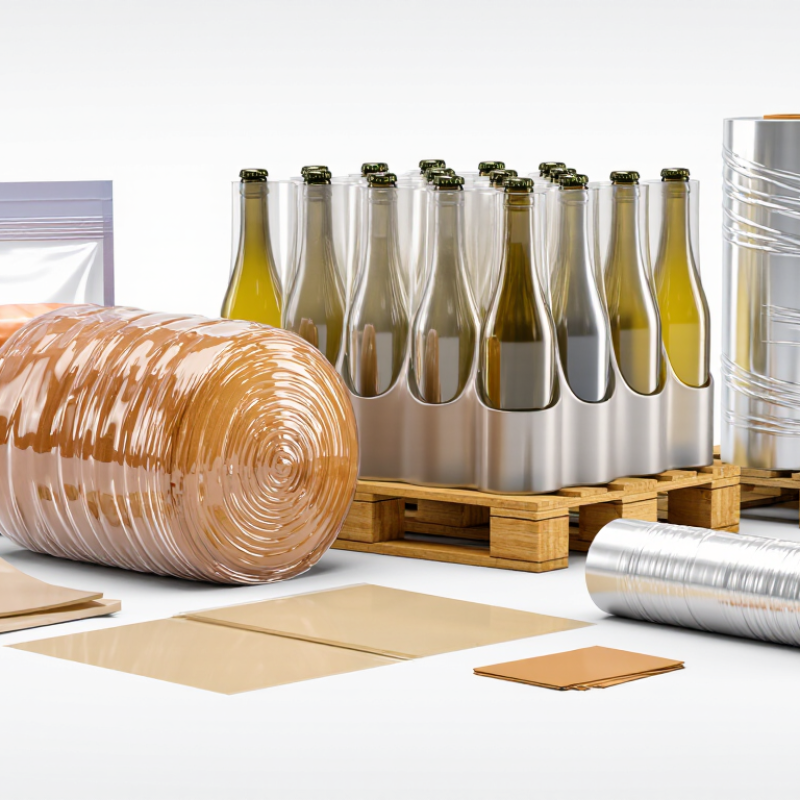
Flexible Film Packaging: Scope and $42.5B in U.S. Sales in 2022
Flexible film packaging covers thin, pliable materials converted into bags, pouches, wraps, and liners. Common structures use plastic films, paper, foil, or layered combinations. They protect products from moisture, oxygen, light, and handling damage. A resealable pouch and a clear produce bag look simple, but their material layers and sealing needs can differ sharply.
The Flexible Packaging Association’s 2023 State of the U.S. Flexible Packaging Industry report put U.S. sales at $42.5 billion in 2022. That figure covers the broader flexible packaging sector, not film alone. The association also estimated that flexible packaging represented about 21% of the U.S. packaging market. These numbers show the sector’s scale, but sales do not reveal how much material is recyclable or how well a package performs after use. That distinction deserves more attention.
Tips: Match film structure to product risks, shelf life, and filling equipment. Ask suppliers for barrier and seal data, then test packages under real storage conditions. A pouch that looks sturdy may still leak at a weak seal. Small details matter.
What Are the Top Types of Film Packaging?
Flexible Film Packaging: Scope and U.S. Sales in 2022
Flexible packaging includes products made from flexible materials such as plastic film, paper, and foil. U.S. flexible packaging industry sales totaled $42.5 billion in 2022. This figure represents the overall industry, not sales for an individual film type.
Polyethylene Films: LDPE, LLDPE, and HDPE for Sealing and Protection
Polyethylene films are common choices for sealing and protecting products because they balance flexibility, strength, and moisture resistance.
LDPE feels soft and bends easily. It works well for simple bags, liners, and flexible pouches where smooth heat seals matter.
LLDPE often handles stretching and punctures better, making it useful for heavier loads or packaging with sharp corners.
HDPE is stiffer and often feels crisper. It suits applications needing shape retention and a stronger moisture barrier, though it may feel less pliable.
Tips: Match the film to the product and sealing equipment. Check seal strength, thickness, and puncture resistance with real samples. Small temperature changes can affect seal quality.
The resin name alone does not tell the whole story. Film thickness, additives, and layer combinations can change performance, so two films made from the same polyethylene type may behave differently. A bag that seals neatly on a bench may wrinkle on a fast production line. There is no perfect default; I would test the actual package, including its corners and seams, before choosing a film. That extra check can catch weak seals or unnecessary material use early.
Polypropylene Films: BOPP and CPP for Clarity, Stiffness, and Heat Sealing
Polypropylene films are widely used in flexible packaging because they balance visual appeal with practical processing needs. BOPP, or biaxially oriented polypropylene, is stretched in two directions during manufacture. This gives it a crisp feel, useful stiffness, and a clear surface that can show printed graphics sharply. A pouch or snack wrapper made with BOPP often holds its shape better than a softer film. Clarity matters.
CPP, or cast polypropylene, is generally more flexible and can provide reliable heat-sealing performance. It is often used as an inner layer, where the film must seal around the product and tolerate contact with warm sealing jaws. The exact sealing temperature and strength depend on the grade, thickness, and machine settings. Small changes can matter.
BOPP and CPP may also be combined in a laminate, pairing a more rigid outer layer with a sealable inner layer. The choice should reflect the product, filling speed, and storage conditions—not appearance alone. A frequent oversight is assuming every CPP film seals at the same temperature. It does not. Testing sample packs on the intended line can reveal weak seals, wrinkles, or excessive film stiffness before a larger production run. It is worth checking those details.
PET and Nylon Films: Strength and Performance in Multilayer Packaging
PET and nylon films bring different strengths to multilayer packaging. PET offers stiffness, clarity, and a stable surface for printing. It helps a pouch or lidding film hold its shape during handling. Nylon adds toughness and resistance to punctures and abrasion. That matters when packages contain sharp edges or face rough transport. Neither film does every job. Nylon can absorb moisture, which may reduce its oxygen-barrier performance in humid conditions.
Tips: Match each layer to a specific need. Check the product’s moisture, oxygen, and handling requirements. Test the finished structure, not just individual films. Small differences in thickness or sealing conditions can affect package performance.
In a practical structure, PET may provide a clear outer layer, while nylon helps resist damage. A separate inner layer can provide heat sealing and, when needed, additional barrier properties. The right combination depends on the product, filling process, and storage conditions. A film that performs well in a dry test may behave differently in a humid warehouse. That detail is easy to miss. More layers can also make material recovery harder, so added performance should justify added complexity. Trial runs help reveal wrinkles, weak seals, or punctures before production scales up.
What Are the Top Types of Film Packaging? - PET and Nylon Films: Strength and Performance in Multilayer Packaging
| Film type |
Main strengths |
Barrier and protection |
Common role in a multilayer structure |
Important considerations |
| PET (polyethylene terephthalate) |
Good stiffness, tensile strength, dimensional stability, and print surface; tolerates many converting and filling processes. |
Provides useful aroma and gas barrier, but is not a complete oxygen or moisture barrier by itself. |
Often used as the outer structural and printable layer, for example in PET/PE laminates. |
Standard PET is generally not heat-sealable; a sealant layer such as PE is commonly added. |
| Nylon (polyamide, commonly oriented PA) |
Strong, tough, and resistant to puncture and abrasion; useful where packages face handling or sharp contents. |
Can provide good oxygen barrier under dry conditions and helps protect against mechanical damage. |
Often placed between an outer layer and a sealant layer in vacuum, chilled, or puncture-resistant packs. |
Nylon absorbs moisture, which can reduce its oxygen-barrier performance and change its mechanical properties. |
| PE (polyethylene) |
Flexible, moisture resistant, and widely used for reliable heat sealing. |
Good water-vapor barrier; comparatively limited oxygen barrier. |
Commonly forms the inner sealant layer in laminates such as PET/PE or PA/PE. |
Its lower stiffness and heat resistance compared with PET can limit its use as the sole structural layer. |
| PP (polypropylene) |
Lightweight and relatively stiff, with useful moisture resistance; oriented grades can offer good clarity and stiffness. |
Generally offers a good moisture barrier but is not a high oxygen-barrier material on its own. |
Used in packaging films and, in suitable grades, as a sealable or structural layer. |
Sealability and performance depend on the PP grade and film orientation; some oriented films need a sealant layer. |
| EVOH (ethylene vinyl alcohol) |
Provides a very effective oxygen and aroma barrier when kept sufficiently dry. |
High oxygen-barrier performance in suitable conditions; its barrier is sensitive to humidity. |
Used as a thin barrier layer, typically protected between moisture-resistant layers in a coextruded or laminated structure. |
Usually paired with other polymers because it needs protection from moisture and is not typically used alone as a flexible package structure. |
Note: Film performance varies with grade, thickness, orientation, humidity, temperature, and package design. The structures shown are common examples, not fixed specifications.
Barrier and Shrink Films: EVOH, Metallized Layers, and Product Protection
Barrier films help slow oxygen, moisture, and aroma transfer, but no single structure blocks everything equally. EVOH is valued for its strong oxygen barrier, especially in fresh or sensitive foods. It is often placed between protective plastic layers because moisture can weaken its performance. A clear pouch may look simple, yet its layers do different jobs.
Metallized films use a very thin metal coating to limit light and gas transmission. They can help protect coffee, snacks, and dry ingredients from fading or losing aroma. The barrier is not invincible. Creases, sharp folds, or poor seals may create weak points, so package testing matters more than a material label alone. A silver surface is not proof of perfect protection.
Shrink films tighten around a product when heated, helping reduce movement and keeping several items together. Some multilayer shrink structures also add barrier properties, though shrink performance and protection depend on the full film design. A tray of chilled food, for example, may need a different balance of seal strength and oxygen control than a bundle of household goods. In practice, I would test the filled package under realistic handling conditions. Lab results can miss a rough corner or a hurried seal. That part is easy to overlook.